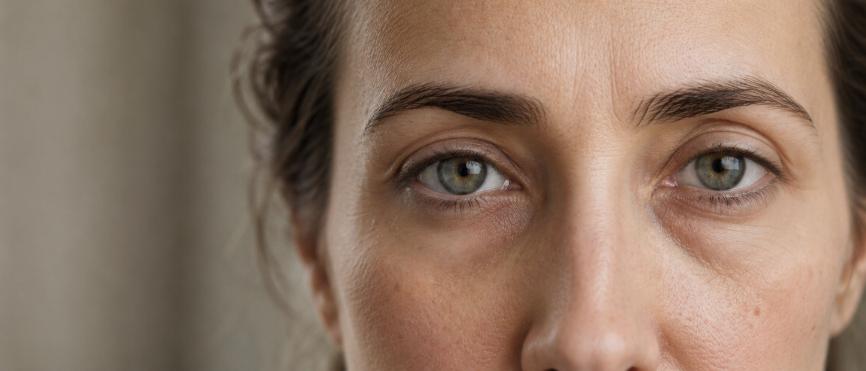

Nobody sits down in my clinic and asks for filler in eight places. They come in because several things seem to have changed at once: the cheeks look a little flatter, the corners of the mouth have started to turn down, and a once clean jawline is quietly softening.
Treating each of those as a separate problem can miss what is happening to the face as a whole.
The 8 Point Facelift is a structured way of using dermal filler to restore support and volume in several connected areas. For the right patient, that can improve facial contours and create a subtle lifting effect without surgery. For someone with more significant loose skin, filler may not be the answer at all.
In this article
- What the 8 Point Facelift Is
- The Eight Points, and Why They Matter
- Who We Suggest It For, and Who We Don’t
- What Happens at Your Appointment
- How Long Does an 8 Point Facelift Last?
- 8 Point Facelift vs a Surgical Facelift
- Side Effects, Aftercare and Reversibility
- Frequently Asked Questions
- Talk It Through With Us
What the 8 Point Facelift Is
The 8 Point Facelift, sometimes called an 8 point lift or liquid facelift, is a structured dermal filler technique. Rather than seeing a cheek, fold or jawline in isolation, we look at how different areas of the face are supporting one another. As facial volume changes over time, a loss of structure through the cheeks and mid-face may affect what you see further down the face.
The technique was originally developed by Brazilian plastic surgeon Dr Maurício de Maio as an anatomy-led approach to filler placement. His thinking has since evolved into a broader system of individually mapped treatment points, and the field has been going the same way: moving away from fixed formulas and towards more individualised, more conservative treatment. The important part for us is not just getting filler into eight places. It’s deciding where restoring support could make a significant difference to the face as a whole.
It isn’t a surgical facelift. There aren’t incisions or general anaesthetic, and it can’t remove excess skin or reposition deeper tissues in the way surgery can.
The Eight Points, and Why They Matter
The traditional framework identifies eight strategic areas through the mid and lower face, which include:
- The outer cheekbone, which can provide support through the upper cheek.
- The front of the cheekbone, where volume helps shape the mid-face.
- The central cheek, an area that often becomes flatter with age.
- The nasolabial area between the nose and mouth.
- The corner of the mouth, which can start to turn down as surrounding support changes.
- The pre-jowl hollow beside the chin.
- The angle of the jaw.
- The lower cheek beneath the cheekbone.
The amount used at each point is not fixed, and we don’t treat the process as a paint-by-numbers exercise. Your bone structure, existing volume, asymmetry, and the areas that actually concern you all affect the plan. This also explains why we may discuss treating somewhere you were not expecting.
If the fold beside your nose has become more noticeable partly because support through the cheek has reduced, concentrating all the filler in the fold may not give the most balanced result. Restoring appropriate cheek support first may improve the way that area looks without trying to fill the crease away.
The same principles apply to the mouth, marionette area, and jawline. We plan the face before we plan the syringes. Eight points are a framework, not a requirement to put an identical amount of filler into eight identical places.
Who We Suggest It For, and Who We Don’t
We are most likely to discuss an 8 Point Facelift with somebody noticing several early or moderate changes together. Often it’s some combination of volume loss through the cheeks, early jowling, a jawline losing its definition, and that harder-to-name sense of looking more tired than you feel.
One group I’m seeing more often is patients who have lost weight quickly, sometimes with the help of the newer weight-loss injections, and find their face has deflated faster than the rest of them. That pattern of volume loss is exactly what this technique helps, though timing does matter: I’d usually want your weight reasonably stable before we treat, or we risk chasing a moving target. I’ve written more about this in our guide to rapid weight change and your face.
We treat more men with this technique than you would think. The planning is different rather than the treatment: for a male face the aim is usually support and definition through the jaw and chin without softening or rounding the midface, so the same eight-point framework gets used with different priorities and different products. If that’s you, our article on the quiet rise of male tweakments covers the wider picture.
Some patients aren’t looking for a dramatic change at all. They want to look a little fresher while keeping the proportions and expressions that make their face theirs. This technique can suit that approach. It doesn’t suit everybody.
Where significant skin laxity is the main issue, adding more volume is unlikely to do the job of a facelift. Taken too far, it can make the face look heavier. In those circumstances, we may discuss another treatment or suggest getting a surgical opinion.
We are comfortable having that conversation. A consultation has done its job if it establishes what is likely to help, even when the answer is not the treatment you originally came in asking for.
Expectations matter too. We can’t replicate somebody else’s before-and-after photograph on your face. Bone structure, skin quality, existing volume and the way your body responds to filler are individual, so results vary.
It’s worth mentioning the worry of the overfilled look. Faces that look puffy or heavy after filler are almost never the product’s fault. They’re a planning failure, too much volume, in the wrong places, added too quickly, often over years of routine top-ups. Avoiding that outcome is a decision we make before the first injection: conservative amounts, placement that supports rather than inflates, and a review-first approach to maintenance. If your instinct on filler has always been “I don’t want to look like I’ve had anything done”, you’re describing the result we’re aiming for, not a reason to avoid the treatment.
The 8 Point Facelift can be genuinely rewarding because you are assessing the face and looking at where small additions of filler can really create the appearance of a lift and subtle areas of volume. It can be incredibly youth-enhancing. I always say to my patients that the kind of compliments we are hoping for are along the lines of “You look well” or “Have you been away?” It’s lovely that people notice when we are looking better, but we don’t necessarily need them to know why.
What Happens at Your Appointment
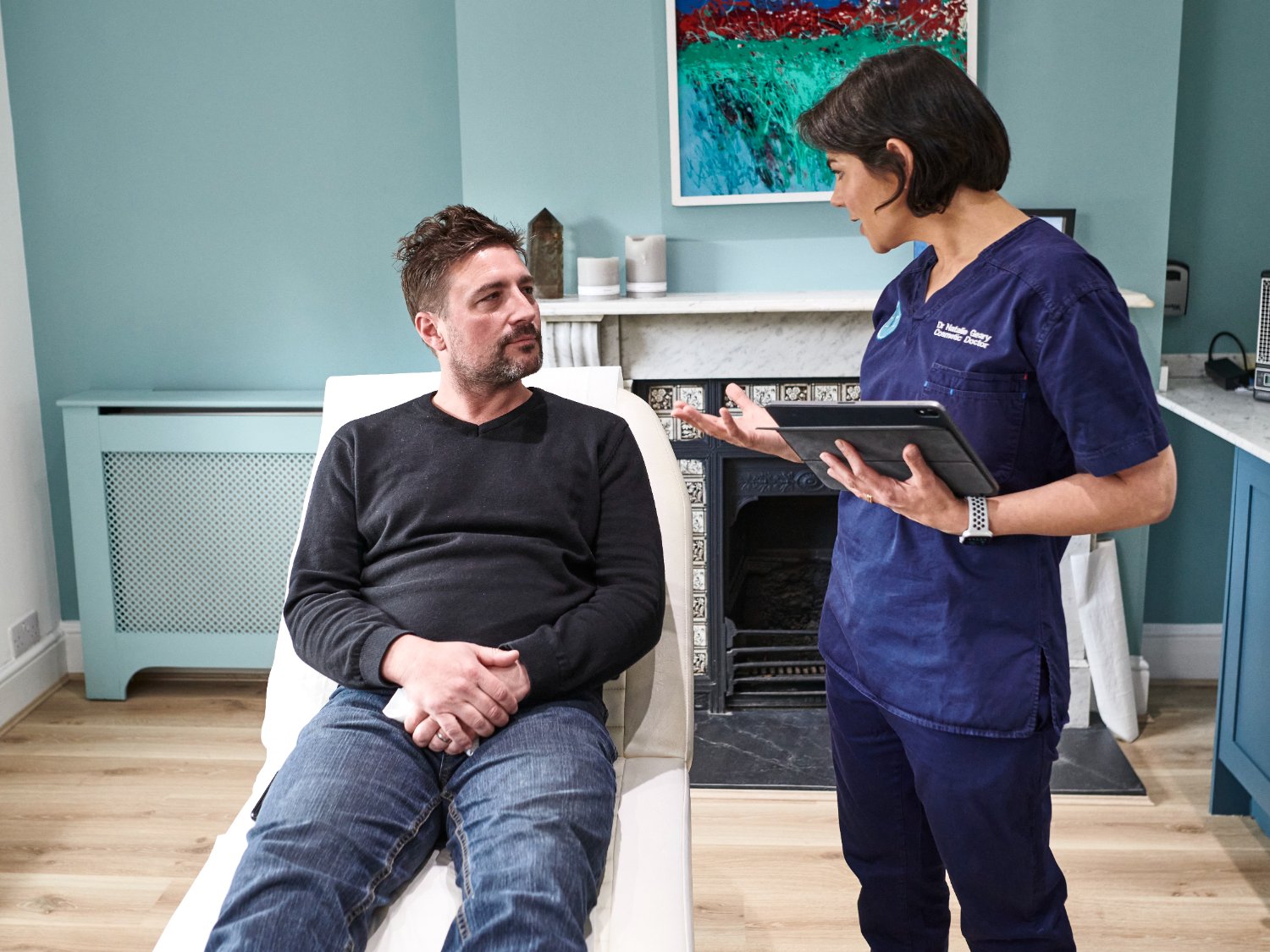
Consultation comes first. We look at your face at rest and in movement, talk about the changes you have noticed and work out which areas are contributing most. We also want to know what you don’t want. Someone who likes a slim face, for example, may have very different priorities from somebody who actively wants fuller cheeks.
If we think the 8 Point Facelift is appropriate, we agree the treatment plan before injecting.
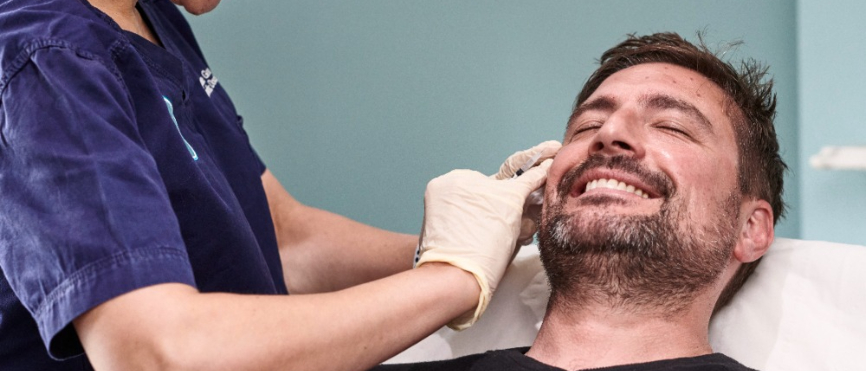
On the day, we cleanse and assess the face again before placing the chosen hyaluronic acid fillers with a needle or cannula, depending on the area and technique. Topical numbing cream can be used to improve comfort. Some of these points sit deep, close to the bone, and others much more superficially, which is part of why the same product behaves differently in different hands.
We advise allowing around 60 minutes for the appointment. Patients often describe pressure, pinching or brief stinging rather than one continuous sensation. Experiences do vary, however.
Most people can return to normal daily activities afterwards, but that doesn’t mean nothing will be visible. Swelling, redness, tenderness and bruising are all possible, so we’d avoid planning treatment immediately before an important event.
Wondering what would suit your face?
Consultations at our clinic are £50, redeemable against treatment, and led by our medical team. No pressure, no assumptions, just honest advice.
How Long Does an 8 Point Facelift Last?
As a guide, we usually expect results lasting about 12 months, although in many patients they can last up to 18, and there is no date on which the treatment suddenly disappears. How long yours lasts depends on the fillers selected, where they are placed, how much is required, and how quickly your body breaks the product down.
That means maintenance should be based on what we see, not the calendar.
We don’t believe everybody needs an automatic full top-up every year. We instead review your face, see what support remains and decide whether anything actually needs treating. Sometimes a smaller maintenance treatment is enough, and sometimes the right advice is to leave it alone.
8 Point Facelift vs a Surgical Facelift
Despite the name, an 8 Point Facelift and a surgical facelift are very different treatments. Filler replaces selected areas of lost volume and can add structural support. In suitable patients, that may improve facial contours and give the appearance of a subtle lift.
The mechanism is not the same, though: filler works by restoring volume and support, not by tightening or repositioning skin, so any lift you see is an indirect effect of that support rather than a literal lifting of tissue. Surgery can do more for the lifting aspect. A facelift can reposition facial tissues and remove excess skin, which means it can address significant laxity that filler can’t.
The 8 Point Facelift is performed with injections in clinic and doesn’t involve a surgical recovery period. But bruising, tenderness and swelling can still occur.
A surgical facelift involves incisions, anaesthesia and a much longer recovery, but it can produce changes that injectable filler simply can’t.
If your main concern is loose skin, attempting to replace surgery with more and more filler is unlikely to give you what you want. We prefer to tell you that at consultation and suggest a surgical opinion rather than have you pay for a treatment that was never capable of producing the result you had in mind.
If your changes are mostly about lost volume rather than loose skin, flatter cheeks, early jowling, a jawline losing its definition while the skin itself still has reasonable elasticity, then you’re in the situation this technique was designed for, and surgery would be a bigger intervention than your face actually needs.
Side Effects, Aftercare and Reversibility
Dermal filler is an injectable medical treatment, so we discuss both the likely short-term effects and the less common complications before you go through with it.
Swelling, tenderness, redness and bruising are common around injection sites. Some people experience temporary lumpiness or asymmetry while swelling settles. Less common but more serious complications can include infection or filler affecting a blood vessel. Very rarely, vascular complications can damage surrounding tissue or affect vision.
How quickly a problem is recognised and managed matters, which is one reason we believe medical experience and detailed knowledge of facial anatomy are important when choosing an injector. We are a doctor-led, CQC-registered clinic, and our role doesn’t stop when the injections are finished. You should know how to contact us if something doesn’t feel or look right afterwards.
It’s worth knowing that the law has started to catch up with our view: since 2021 it has been illegal in England to give cosmetic filler to anyone under 18, and the Government has confirmed plans for a licensing scheme covering non-surgical cosmetic procedures, although the details are still being consulted on and it isn’t yet law.
Hyaluronic acid filler can also be broken down using an enzyme called hyaluronidase when clinically appropriate. You can read about our approach to dermal filler dissolving.
You’ll sometimes hear this as filler being “fully reversible”. We think that wording is a bit too simple. Imaging studies have also found that hyaluronic acid filler can remain in the face considerably longer than some marketing suggests, sometimes for years, even after the visible effect has softened, which is one of the reasons we prefer to treat conservatively and review rather than routinely top up. Dissolving is a separate medical treatment and doesn’t mean that every possible complication or unwanted effect can be undone.
The practical aftercare for the first couple of days is pretty simple. Stay upright for at least four hours after treatment, sleep with your head slightly elevated on the first night, and avoid touching or massaging the treated areas. For 24 to 48 hours, skip alcohol, intense exercise and anything hot, including saunas, steam rooms, sunbeds and very hot showers, because all of these increase blood flow to the face while the filler is settling. Light activity like walking is fine from the next day. And if you have a big event or travel planned soon after your appointment, tell us at consultation so we can time your treatment sensibly.
For practical advice after your appointment, our complete guide to dermal filler aftercare explains what to avoid, what’s normal and when you should contact us.
Talk to our medical team
Book a £50 consultation, redeemable against treatment, and we will assess what you actually need, including whether treatment is right for you at all.
Frequently Asked Questions
How much filler does an 8 Point Facelift use?
There isn’t a standard amount that suits every face. It depends on your anatomy, how much volume has changed, and which of the treatment points actually need support.
Eight points doesn’t mean eight syringes. We assess the amount required at consultation and explain the proposed treatment and cost before you go ahead.
Does an 8 Point Facelift hurt?
Most patients find it more tolerable than they expected. We apply topical numbing cream beforehand. During treatment, people tend to describe pressure, a pinch or a brief sting at each point rather than continuous pain, and some points are more sensitive than others.
If you’re anxious about discomfort or anything else about the treatment, tell us at consultation. Pacing the treatment and talking you through each area makes more difference than people expect.
When will I see the final result?
You’ll see a change immediately, but it isn’t the final result. Swelling can exaggerate or distort the effect in the first few days, so we’d ask you not to judge the outcome in that window. Most swelling settles over the first one to two weeks, which is when the true result becomes visible as the filler integrates with your tissues.
If anything still concerns you once things have settled, that’s exactly what your review is for.
Can an 8 Point Facelift be reversed?
The hyaluronic acid filler itself can usually be dissolved with hyaluronidase if there’s a clinical reason to do so. We would assess the area first and decide whether partial or complete dissolving is appropriate. Hyaluronidase is a medical treatment in its own right.
How is it different from having dermal fillers normally?
The difference is mainly in how we plan the treatment.
Dermal filler can be used to address one specific area, such as the cheeks or jawline. With an 8 Point Facelift, we look at several connected areas and consider whether restoring support in one part of the face could improve what you see somewhere else.
Is an 8 point facelift the same as a non-surgical facelift?
The 8 Point Facelift is a type of non-surgical facelift, sometimes also called a liquid facelift. It uses dermal filler at selected points across the face to restore volume and structural support, rather than tightening or removing skin surgically.
Not every non-surgical facelift follows the 8-point technique, though. We use the eight points as a treatment framework and adapt the plan to your facial anatomy rather than treating every patient in exactly the same way.
What happens if I stop having treatment?
Your face gradually returns towards how it would have looked anyway. As the filler breaks down, the volume and support it provided reduce, and the natural ageing process continues as it would have without treatment. Filler used in sensible amounts doesn’t cause the face to sag or collapse once it wears off.
That’s one reason we treat conservatively. A face that has been heavily overfilled for years is a different situation, which is part of why we’d rather use less product and review than routinely add more.
How much does an 8-point facelift cost?
The 8 Point Facelift is currently available from £1,980.
The final cost depends on the amount and type of dermal filler we recommend after assessing your face. We don’t work towards a fixed number of syringes simply because the treatment is called an 8 Point Facelift. Your consultation is where we decide which areas would benefit from treatment and how much product is appropriate.
Talk It Through With Us
You don’t need to arrive knowing whether an 8 Point Facelift is the right treatment for you. That is what we work out together. We can assess where volume and support have changed, explain what filler could realistically improve and tell you when we think another option would make more sense. The aim, always, is the version of you that gets asked whether you’ve been away.
Read more about the 8 Point Facelift or contact us to arrange a consultation.