Five years ago, many of the men who came to see me had been nudged in by a partner, or they’d cancelled twice before actually showing up. Today, they book themselves. They’ve usually done their research. And they’re much less apologetic about being there.
Something has shifted, and not just in the waiting room. The conversation around men and aesthetic treatments, or “brotox” as the tabloids rather cheerfully labelled it, has moved from whispered curiosity to something approaching mainstream.
It’s gathering pace. If you’re a man who’s been quietly wondering about it, your curiosity is entirely normal.
I run an aesthetic clinic, so I have a commercial interest in more men booking treatments. That’s exactly why I want to be honest about what I’d encourage and what genuinely concerns me about where the trend is heading.
After years of treating both men and women, one thing is clear: male patients are rarely looking for transformation. They are usually looking for a fresher, less tired version of themselves.
In this article
What’s Actually Changing
The Zoom Effect
The forces causing this shift aren’t especially mysterious once you look at them clearly. The first is the Zoom effect. Several years of staring at your own face on a screen have changed everyone’s relationship with how they look.
You start noticing the crease between your eyebrows that appears when you’re concentrating, the way fatigue shows differently on camera than it does in the bathroom mirror at 7am. Screens have made self-perception unavoidable in a way it simply wasn’t before, and that has consequences.
A Generational Shift in What Counts as Normal
The second force is generational. Today’s men in their late twenties and thirties do not have the same gendered experiences with grooming and beauty treatments as their fathers. Skincare, SPF, and the occasional facial have been a social norm for years.
Anti-wrinkle treatment is, for many of them, a natural extension of the same logic. The stigma that would have stopped someone a generation ago simply doesn’t carry the same weight.
Workplace Pressure is Real
The third is more pragmatic: workplace pressure. Men in their forties and fifties who are competing for jobs, clients, or credibility with people fifteen years younger have practical reasons for not wanting to look exhausted. This isn’t vanity. Women have been doing this calculation for decades in professional settings, and have always been a little more forthcoming about it.
The conversation has been helped along by high-profile cases like Barry Keoghan, whose noticeably sharper jawline sparked widespread speculation about male tweakments. But the press coverage tends to focus on the social permission angle (men are finally “allowed” to care) and misses something I see daily in my consultation room.
The press narrative of men suddenly embracing dramatic enhancement is largely wrong. Most male patients want the minimal intervention feasible to address the specific issue that is affecting them.
Wondering what would suit your face?
Consultations at our clinic are £50, redeemable against treatment, and led by our medical team. No pressure, no assumptions, just honest advice.
What Men Actually Ask for in the Consultation
“I Just Want to Look Less Tired”
The phrase I hear most often, in various forms, is: “I just want to look less tired.” Not different. Not younger in any dramatic sense. That distinction matters a lot, both clinically and in terms of what it tells you about what male patients actually desire.
Where Men Typically Start
The most common starting points are forehead lines, the frown lines between the eyebrows, and crow’s feet. These are the most visible signs of exhaustion and stress on the face. They have been bothering men discreetly, often for years, before they book a consultation.
I’m also seeing real interest in jawline definition and chin profiling. Treatments that sharpen structure rather than smooth it appeal to patients who want something that complements how they already see themselves.
For Men Who Are Nervous About Needles
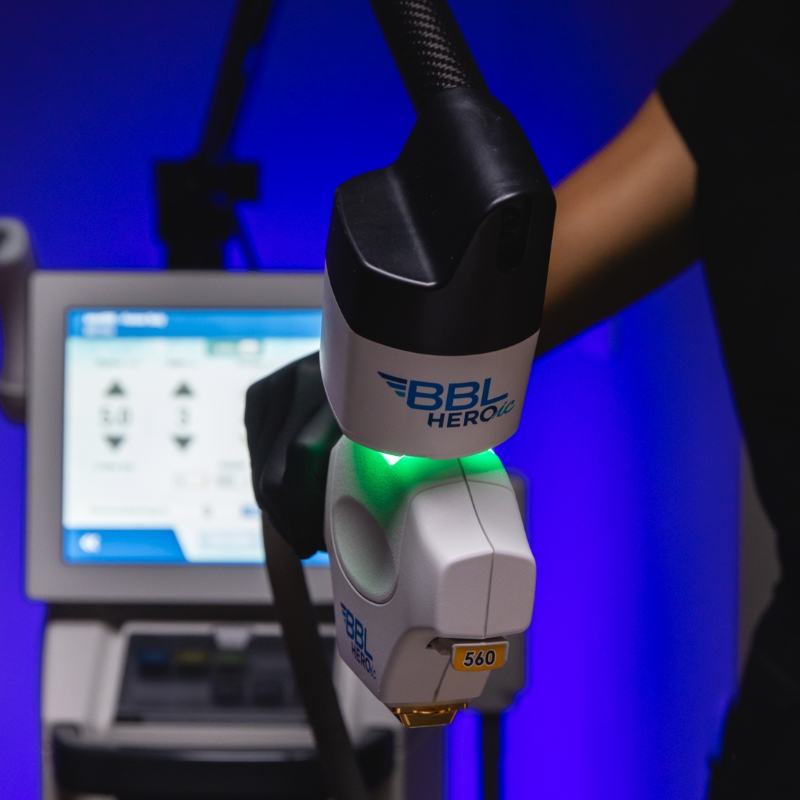
There’s also a large group of men who are curious but genuinely nervous about needles, and the same logic that drives men to want subtle, low-key results applies here, too. For them, non-injectable options like BBL MOXI are worth knowing about.
It’s a laser treatment that addresses sun damage, redness, uneven tone, pigmentation, enlarged pores, and early wrinkles with no needles involved. It’s become a popular entry point for men who want a meaningful result but aren’t ready to commit to injectables from the start.
What Worries Me About The Rise of Brotox
A Growing Market Attracts the Wrong Providers
Men addressing things that the old cultural script told them to silently put up with is healthy. Reducing suffering that doesn’t need to exist is entirely justified. The issue is that a new and growing market attracts new providers.
The male aesthetics space is now full of practitioners who see male patients as a growth opportunity rather than as patients with specific clinical needs. The two orientations can lead to very different outcomes.
Male Anatomy is Different, and it Matters
Male facial anatomy is genuinely different, and it matters. Men have stronger muscles, a thicker brow structure, and different patterns of facial ageing. Injection placement that works well for a female patient can feminise male features in easily noticeable ways. And if the person holding the needle doesn’t understand the anatomy they’re working with, that’s exactly what happens.
The UK aesthetics industry is loosely regulated. There is no requirement for a medical qualification to perform injectable treatments. The Joint Council for Cosmetic Practitioners (JCCP) and successive government consultations on tightening this regulation exist precisely because the current system does not effectively protect patients.
Subtle Results are Harder to Get Right than Dramatic Ones
A practitioner who can reliably produce dramatic change can still misjudge the calibration required for a small, precise, natural-looking result.
Volume-driven chains and price-led clinics are especially problematic for male patients because the consultation time required to prepare for male anatomy simply doesn’t exist in that model. The margin for error is tighter when the changes are smaller, and the result when it goes wrong is more visible.
Talk to our medical team
Book a £50 consultation, redeemable against treatment, and we will assess what you actually need, including whether treatment is right for you at all.
Here’s Where to Start
If you’ve been quietly turning this over for a while, the most important question isn’t whether to do it. It’s about who you do it with.
The following isn’t a checklist for being a careful consumer. It’s the minimum clinical standard you should expect before anyone puts a needle near your face:
- A medical qualification (not a beauty certificate)
- Demonstrable experience with male patients specifically – ask to see before and after results on male faces, not just a general portfolio
- A practitioner who will talk you out of treatments you don’t need, not just confirm the ones you came in asking about
- Enough time in the consultation to fully understand what you want and plan for your anatomy (not a 10-minute chat)
- A conversation that feels like a clinical consultation, not a sales pitch
When you’re ready to have that conversation, and you’d like a consultation that takes the time to do this properly, book a consultation with Dr Natalie Geary at Light Touch Clinic.