“How many sessions will I need?” is usually the second thing people ask us about BBL, straight after whether it hurts. It’s a fair question, especially if a friend was told one number and the internet says another.
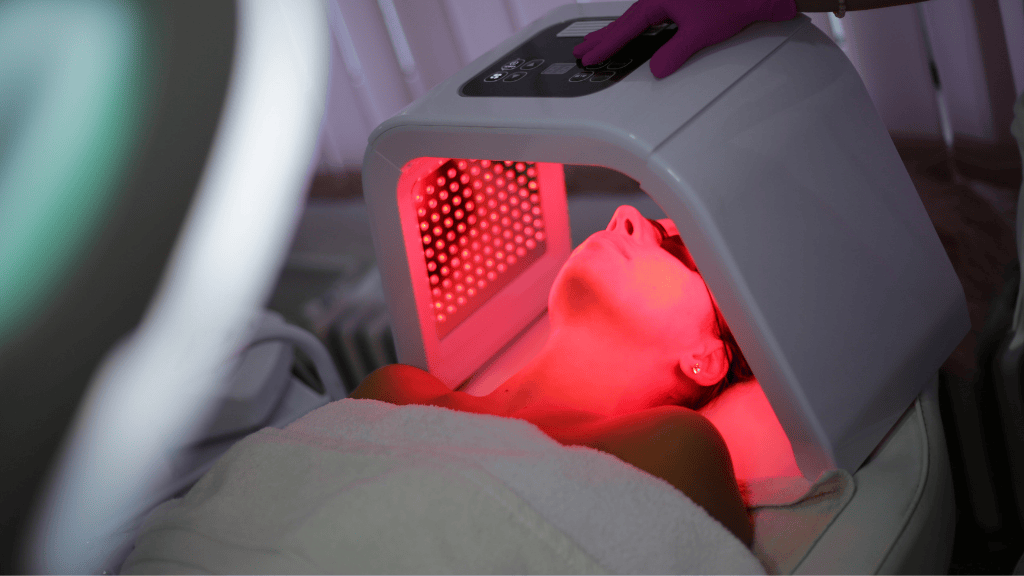
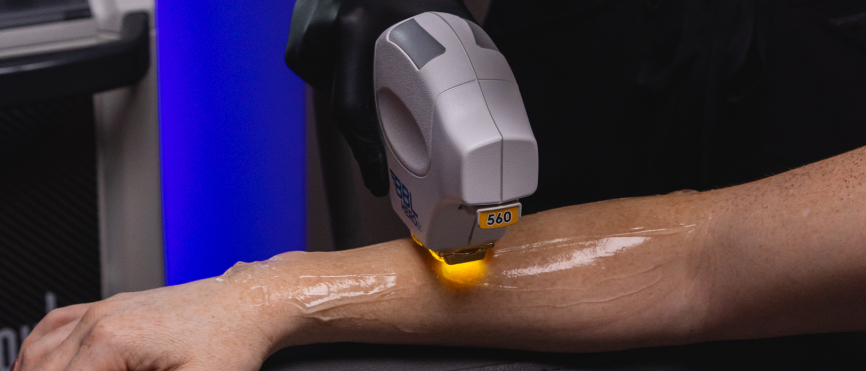
To be clear from the start, this is BBL as in BroadBand Light, Sciton’s light-based treatment for sun damage, redness and uneven tone. It’s honestly one of our favourite treatments to offer, partly because of how often patients come back for their second session asking why nobody told them about it sooner, and partly because Sciton, the company behind it, has asked to use Sammy’s before-and-after photos. It has nothing to do with the cosmetic surgery that shares the same three letters. You’ll often see it searched for as “BBL laser”, although technically it isn’t a laser. MOXI, which we often pair with it, is.
A course followed by maintenance is also the thinking behind our BBL and MOXI Skin Memberships. If you’d like to know how each treatment works first, our BBL HEROic and MOXI page covers it.
In this article
- Sessions at a Glance: A Course, Then Maintenance
- Why One Session Rarely Does It
- What the Long-Term BBL Research Actually Shows
- How Long Should You Wait Between Sessions?
- Why Autumn and Winter Are a Good Time to Start
- What a Year of Skin Treatment Looks Like
- Course, Pay As You Go or Membership?
- Is BBL Worth It?
- Frequently Asked Questions
- Start With a Consultation
Sessions at a Glance: A Course, Then Maintenance
Most skin plans have two phases. The course is a short run of sessions fairly close together, aimed at the damage that’s already there. Maintenance means fewer sessions spread across the year, aimed at the damage your skin keeps picking up.
| Treatment | Typical number of sessions | Gap between sessions | What changes the number |
|---|---|---|---|
| BBL course | 2 to 4 | 4 to 6 weeks | How much sun damage there is, and whether it’s mostly redness or brown pigment |
| BBL maintenance | 3 to 4 a year | Every 3 to 4 months | How much sun you get, and how your skin held up after the course |
| MOXI course | 3 to 4 | 4 to 6 weeks | How established the texture, pores and fine lines are, and how you recover |
| MOXI maintenance | 1 to 2 a year | Every 6 months or so | Whether rougher texture starts to return |
| BBL and MOXI combined | 3 to 4 appointments | 4 to 6 weeks | Whether both colour and texture need work, and how reactive your skin is |
Your skin type, the kind of pigmentation and how you respond to the first session all move these numbers. Treat the table as a starting point. A plan is a framework we review at every visit, not a block of identical appointments booked before we’ve seen how your skin reacts. Some people need fewer sessions than the table suggests, and if that’s you, we’ll say so.
Why One Session Rarely Does It
Sun damage builds up in layers over decades. One BBL session lightens what it reaches, but treated pigment clears gradually over the following weeks, and widespread damage usually needs more than one pass. Redness tends to respond in stages too.
Then there’s the sun you haven’t had yet. A course clears a lot of what’s there, but your skin carries on ageing and picks up new damage every summer after the course ends. That’s why we talk about maintenance rather than BBL “wearing off”. The results of a course don’t vanish. The thing that caused the damage just keeps going.
MOXI works on a different timescale. Each session creates thousands of microscopic treatment zones, and the skin’s repair response, including new collagen, builds over the weeks that follow. Spacing sessions out gives each one time to do its work before the next.
None of this comes with a guaranteed result. Skin varies from person to person, which is why we review your progress at each visit rather than assuming.
“I booked a course of three BBL laser sessions… Not much after one session but after two there was an incredible difference in skin texture, radiance and clarity of my skin.”
Rachel B., Google review
What the Long-Term BBL Research Actually Shows
Two studies come up whenever people talk about BBL and long-term skin health. Both are worth knowing about. Both also have limits, and we think you should hear about those from us.
The Stanford gene study
In a 2013 pilot study published in the Journal of Investigative Dermatology, researchers at Stanford treated the forearm skin of five women over 50 three times, about four weeks apart. They then compared treated skin with untreated skin and with samples from five women under 30. Of the 2,265 genes whose activity had changed with ageing, 1,293 had shifted back towards the pattern seen in younger skin after treatment.
The 5 to 11 year photo study
The second study, published in Cosmetic Dermatology in 2013, looked back at 15 people aged 38 to 69 who’d had at least one full-face BBL treatment a year for between 5 and 11 years. A panel of 491 evaluators, who didn’t know which photo was which, estimated each person’s age from photos taken before their first treatment and after their last. Over that time, the group’s actual age rose by a median of nine years. In the photos, evaluators judged them to look a median of two years younger than when they started.
What these studies don’t tell us
Both studies are small. The photo study is retrospective, so it looked back at people who had already chosen to keep having treatment rather than comparing them with a similar group who didn’t. Its participants covered Fitzpatrick skin types I to IV only. Doctors with links to Sciton, which makes BBL, are among the authors of both papers. And a change in gene activity in a biopsy isn’t the same as a visible result you’re guaranteed to see.
Sciton’s name for this regular-maintenance approach is Forever Young BBL. Think of it as the name of a schedule, and judge it on what it does for your skin.
We still find the research persuasive, because it fits what we see in patients who keep up their maintenance.
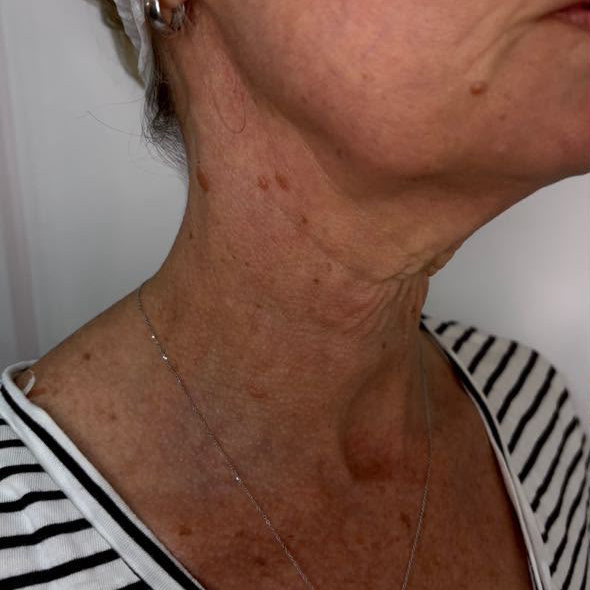
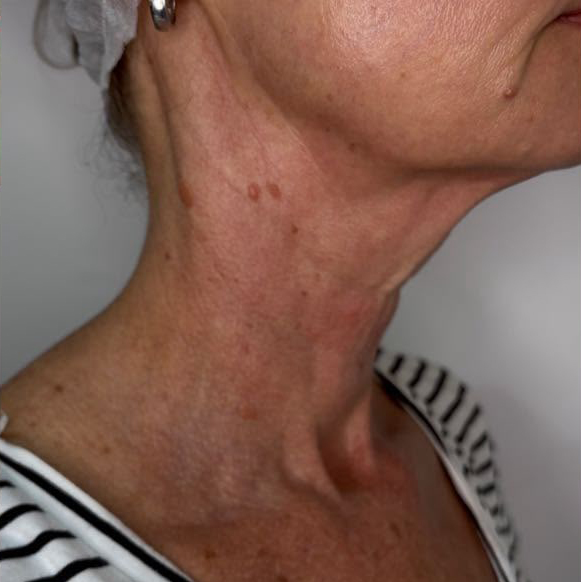
Post 1 treatment of SkinSmooth and SkinTyte | BBL HEROic | Light Touch Clinic
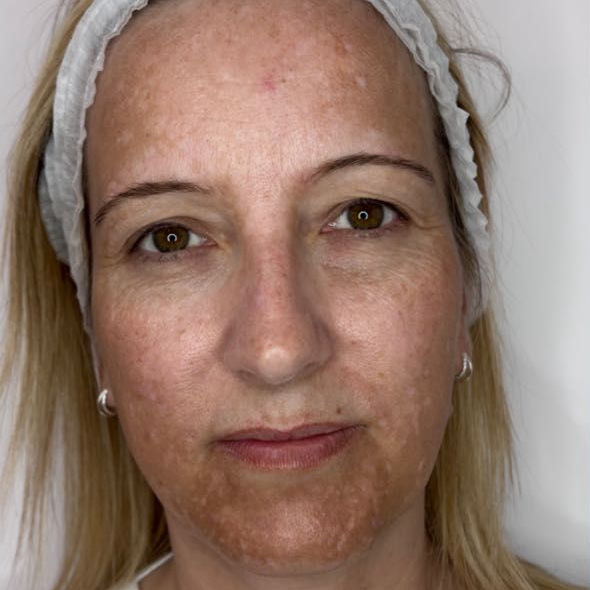
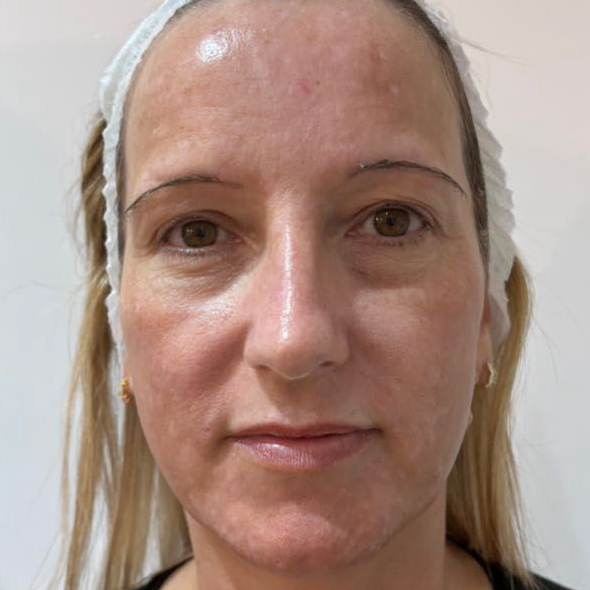
Post 2 treatments | MOXI Laser | Light Touch Clinic
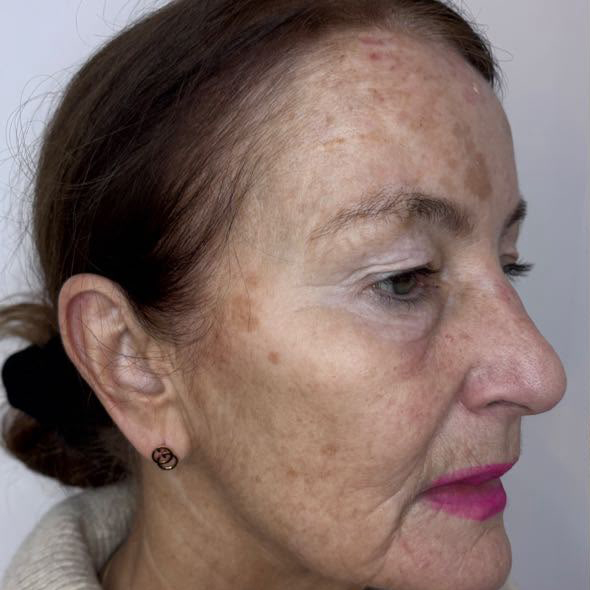
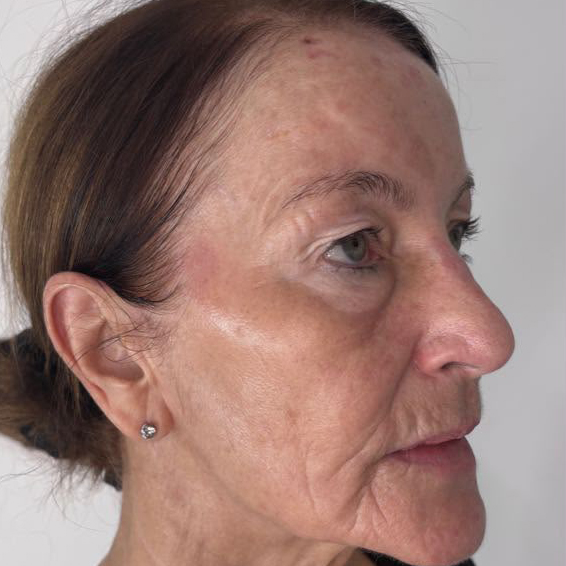
Post 4 treatments | MOXI Laser | Light Touch Clinic
How Long Should You Wait Between Sessions?
During a course, we usually leave four to six weeks between BBL sessions, and four to six weeks between MOXI sessions.
We don’t rush it. Treated brown spots often darken and flake before they fade, and that needs to finish before we can see what’s left to treat. Treating again before your skin has settled doesn’t speed anything up. Maintenance sessions are spaced further apart, usually spread across the year.
If we combine the two treatments in one appointment, BBL comes first, and MOXI follows. That doesn’t always suit everyone, so we confirm your plan once we’ve assessed your skin. Our BBL vs MOXI article explains when we combine them and what recovery looks like.
Not sure if this treatment is right for you and your skin?
Suitability genuinely differs from person to person. A consultation lets us look at your skin in person and tell you honestly what will and will not help.
Why Autumn and Winter Are a Good Time to Start
BBL makes skin temporarily more sensitive to UV, so a course is best run while the sun is weak. In the UK, UV levels drop through autumn and stay low over winter.
Autumn has two other things going for it. Any summer tan has had time to fade, which matters because we often postpone BBL on tanned skin. And starting in November leaves enough time to finish a course before spring arrives.
You may have read our spring skin reset article, which recommends starting in March. Both are right. November and March both sit in the low-UV part of the year. Start now and you finish before spring. Start in March and you finish before summer.
What a Year of Skin Treatment Looks Like
Here’s an example of a year that starts in November, for someone with sun damage and redness. It’s an example, not a promise. Every plan is set at your consultation, and yours may look quite different.
- November: a consultation and an OBSERV 520x skin scan, which images your skin in different light so we can see and track pigment and redness. If your skin is ready, your first BBL session follows.
- December to February: two more BBL sessions, four to six weeks apart, with a Hydrafacial in between to keep your skin hydrated.
- Late summer or autumn: a maintenance session, timed after the strongest sun, and a second Hydrafacial.
- All year: a broad-spectrum SPF every day. We stock SkinCeuticals sun protection. This is the part of the plan that protects everything else.
- The following November: a repeat scan, so you can see how your skin compares with where you started, and we plan year two from there.
That year is, almost line for line, our Renew membership: four BBL sessions for the face and neck, two Hydrafacials, four SkinCeuticals SPF50s and both skin scans. Golden Ticket founding members also get their first BBL upgraded to a combined BBL and MOXI session.
Course, Pay As You Go or Membership?
There are three ways to pay for a year of skin treatment, and none of them is right for everyone.
Paying session by session is the most flexible option. It suits you if you want to treat one concern and aren’t sure about maintenance yet. A course covers a set number of sessions for one treatment. A membership spreads a full year of treatment into monthly payments, with skincare and skin scans included.
Our Skin Memberships launched this autumn. In short:
- Maintain suits people who are happy with their skin and want to keep it that way, including after a BBL course. £195 a month
- Renew is for sun damage, redness, uneven tone or dull skin, if you want visible improvement through the year. £265 a month
- BBL Transform and MOXI Transform are for fine lines, crepey or rough texture and pigmentation, if you want a bigger change. £365 a month each
- Icon covers the face, neck, chest and hands, plus body contouring. £775 a month
Whichever you choose, a consultation comes first, and you don’t need a membership to have BBL. If a course on its own suits you better, we’ll tell you.
Membership launch evening: Thursday 12 November, 5pm, at the clinic on Church Street, Weybridge. Meet the team and ask us anything about which plan fits your skin. A £25 deposit secures your place.
On the night:
- First chance at our 50 Golden Tickets
- A complimentary OBSERV 520x skin scan
- Bring a friend, and they get a scan too
Is BBL Worth It?
For the right skin, we think so. BBL does its best work on visible sun damage, brown spots, redness and uneven tone, the changes that make skin look older before deeper lines appear. If that sounds like what you see in the mirror, you can read how we assess pigmentation, rosacea and thread veins.
It isn’t the right choice for everyone, and some people need extra care:
- BBL needs careful assessment on darker skin tones, and some settings aren’t suitable.
- Melasma behaves differently from sun spots and can react unpredictably to light and heat, so we treat it with caution and sometimes recommend something else.
- If you have an active tan or recent sunburn, we’ll wait.
- We postpone treatment if you’re pregnant.
People also ask whether BBL is better than microneedling. They do different jobs. BBL targets colour, meaning brown pigment and redness, while microneedling works on texture and scarring, closer to what MOXI does. If texture, firmness or scarring is your main concern, ask us about INTRAcel, which combines microneedling with radiofrequency. The better choice depends on what’s bothering you.
See what your skin actually needs
Book a consultation in Weybridge and we will assess your skin, talk through downtime and recommend the treatment that genuinely fits, or tell you if none of them do.
Frequently Asked Questions
How often should you have BBL?
Usually a course of two to four sessions, four to six weeks apart, then maintenance three to four times a year. We confirm the numbers at your consultation and adjust them as we see how your skin responds.
How long should you wait between BBL sessions?
During a course, usually four to six weeks. That gives treated pigment time to clear and your skin time to settle before the next session.
How many MOXI sessions do you need?
Most people start with a course of three to four sessions, four to six weeks apart, sometimes alongside BBL. After that, occasional top-ups help maintain smoother texture. The exact number depends on your skin and what you want to change.
How long do BBL results last?
The improvement from a course typically lasts from several months to a year, but your skin keeps ageing and picking up sun damage in the meantime. Maintenance sessions and daily SPF help you hold on to what the course achieved.
Can you have BBL in the summer?
Sometimes, but it’s not when we’d start a course. BBL makes skin more sensitive to UV, and we postpone treatment on tanned or recently sunburnt skin. Some people can continue maintenance in summer with strict sun protection, and we’ll advise at your consultation.
Do I need a membership to have BBL at Light Touch Clinic?
No. You can have a single session or a course without a membership. Memberships suit people who want a full year planned and paid monthly, and a consultation comes first either way.
How much does a year of BBL cost at Light Touch Clinic?
Our Skin Memberships start at £195 a month, which covers three BBL sessions for the face and neck, two Hydrafacials, SPF and two skin scans over 12 months. For single sessions or a course, we price after your consultation, because the number of sessions depends on what we’re treating.
Is a skin membership worth it?
It’s worth it if you were planning to keep up maintenance anyway. A membership books the whole year in advance, so the maintenance sessions actually happen, and it bundles in skin scans and SPF. If you only want to treat one concern once, paying per session is likely to suit you better.
What happens if I miss a session or need to pause my membership?
Speak to our team as early as you can, and we’ll rebook or pause where we can. The full terms are in your membership agreement before you sign.
Start With a Consultation
You don’t need to work out how many sessions you need before you come in. At your consultation, we’ll look at your skin, take a baseline scan and give you a plan with numbers that fit you. Then you can choose between paying as you go, a course or one of our Skin Memberships.
Get in touch to book, or call us on 01932 849552.