
Most people who ask us about non-surgical rhinoplasty have the same three questions. Will it fix the thing I don’t like about my nose, how long will it last, and is it safe? The answer to the first depends on what you want to change, the second on which filler is used and how you metabolise it, and the third on who’s holding the needle.
In this article
- What Is Non-Surgical Rhinoplasty?
- What It Can and Can’t Fix
- How Long Does Non-Surgical Rhinoplasty Last?
- Who We Suggest It For, and Who We Don’t
- What Happens at Your Appointment
- Does It Hurt? And What’s the Downtime?
- The Safety Question You Should Ask Anywhere
- Non-Surgical vs Surgical Rhinoplasty
- FAQs
- Talk It Through With Us
What Is Non-Surgical Rhinoplasty?
Non-surgical rhinoplasty uses dermal filler placed with precision at a few specific points along the nose to change the shape of its profile without an operation.
You may also hear it called liquid rhinoplasty or a non-surgical nose job. It works by adding small, controlled amounts of hyaluronic acid filler to lift, straighten or balance, so the nose sits differently in the face without anything being cut or removed.
Because the nose is central to how every other feature reads, small changes here tend to look bigger than the millimetres involved would suggest. A bump that has bothered someone for twenty years can appear to soften away in a single appointment. That’s often the point when the questions change from whether filler will work to what the result will actually look like.
If you want the treatment details, our non-surgical rhinoplasty treatment page covers it, and our dermal fillers page explains the product itself.
What It Can and Can’t Fix
Nose filler can camouflage a dorsal hump (the bump on the bridge) by building up the areas above and below it so the profile reads as a straight line. It can lift a drooping or slightly hooked tip by supporting the base of the nose and the tip itself. A low or flat bridge can also be given a little more height and definition from the side. And it can even out minor asymmetry, such as a bridge that deviates a little to one side or a tip that sits marginally off-centre.
What it cannot do is make a nose smaller. Filler adds volume. No version of this treatment removes tissue, narrows the nostrils or reduces a nose that is already large or wide. If that’s the change you’re after, you need a surgical opinion from an ENT or plastic surgeon. Occasionally a straighter profile makes a nose look less prominent from the side, but that’s an optical effect; the nose itself is no smaller.
How Long Does Non-Surgical Rhinoplasty Last?
Non-surgical rhinoplasty typically lasts between 6 and 18 months.
How long yours lasts depends partly on the product and partly on you. For the nose, we use a very light, soft hyaluronic acid filler, because most corrections here are tiny and a softer product lets us place very small amounts with real precision. Everyone breaks filler down at a different rate, and age and skin type both play a part. Some people are still pleased with their result well past a year; others notice it softening sooner.
Results are not permanent, and that isn’t necessarily a drawback. As the filler is gradually absorbed, the effect reduces and the nose moves back towards its untreated appearance. We don’t book top-ups automatically either. We review, look at what remains and what’s changed, and only treat again if there’s a reason to.
Who We Suggest It For, and Who We Don’t
Nose filler works best as a refinement. Quite a few of our nose consultations end without any treatment, and I’d rather turn someone away than treat a nose that filler was never going to suit. The patients who are happiest afterwards are almost always the ones who were already close to the profile they wanted, with one feature getting in the way.
It isn’t the right route if you have a breathing problem or a structural issue such as a deviated septum, or if the change you want would take more volume than a nose can comfortably hold. We don’t treat during pregnancy or breastfeeding, or where there’s active skin infection on or around the nose. If you’ve had a surgical rhinoplasty, we assess with extra care, because surgery changes the blood supply and leaves scar tissue.
Wondering what would suit your face?
Consultations at our clinic are £50, redeemable against treatment, and led by our medical team. No pressure, no assumptions, just honest advice.
What Happens at Your Appointment
Every non-surgical rhinoplasty at our clinic starts with a consultation and assessment, even if you’ve had the treatment before elsewhere. We look at your nose from the front, the side and from below, ask what specifically bothers you and tell you plainly whether filler can address it. If it can’t, we say so and you leave with better information and no treatment. If it can, we agree on a plan and, where it makes sense, treat on the same day.
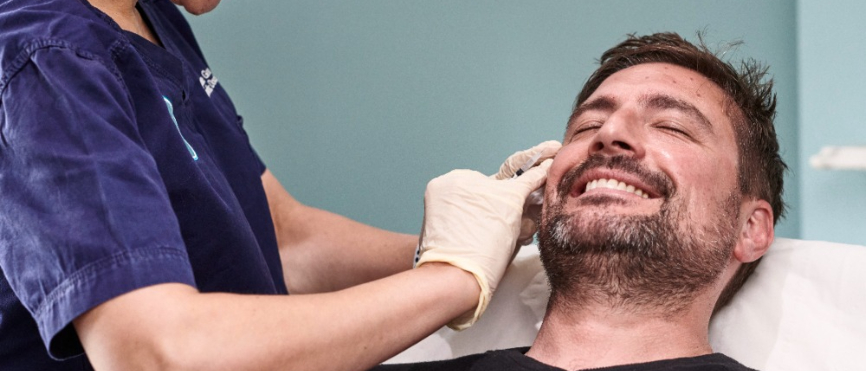
The treatment itself is quicker than most people expect. We apply a topical numbing cream and give it time to work, then place tiny amounts of filler at the planned points with a fine needle. We use a needle rather than a cannula on the nose because the work is so precise. There’s no typical amount: some noses need a correction of around 0.1ml, others a little more, and we rarely go as high as 1ml. Most appointments take around 15 to 45 minutes including numbing time, with the injecting itself lasting only a few minutes.
You see results immediately. There’s a moment, usually when we hand over the mirror and turn a patient side-on: a pause, then the double-take.
Some mild swelling means the final shape settles over the following week or two, but what you see on the day is close to what you’ll keep.
Does It Hurt? And What’s the Downtime?
Discomfort is usually minimal. The numbing cream goes on first, so most of what you’ll feel is pressure and a few brief pinches.
Afterwards, most people head straight back to their day. You may have some tenderness, mild swelling or a small bruise at an injection point, all of which usually settle within a few days. Redness at the entry point is common for an hour or two. Leave makeup and skincare off the treated area for the rest of the day.
Stay upright for at least four hours after treatment. For 24 to 48 hours, avoid alcohol, intense exercise and heat, including saunas, steam rooms, sunbeds and hot showers. Don’t touch, massage or press on your nose during that time, however tempting it is to check the result.
A cold compress wrapped in a clean cloth, held lightly against the area for short periods, can help with swelling. Sleeping on your back with your head slightly raised on the first night can help too. Light activity such as walking is fine from the next day, but skip facials, exfoliants and harsh skincare products for at least a week.
Anything that presses on the nose can move filler before it has settled, so keep glasses off the bridge and avoid lying face down, including on a massage table, for one to two weeks.
Call us straight away if pain gets worse rather than better, if the skin on or around your nose turns pale, dusky or mottled, or if you notice any change in your vision. These are rare, but they need assessing quickly, and we’d always rather hear from you than not. Our complete guide to dermal filler aftercare covers what’s normal in the days after treatment and when to get in touch.
The Safety Question You Should Ask Anywhere
The nose is one of the more delicate areas of the face to inject. Its blood supply is rich and closely connected to the vessels around the eyes, and the tissue is tight, with little room to spare.
That combination means the margin between a well-placed injection and a problem is narrower here than in almost any other part of the face. It’s why we treat the nose more slowly and more conservatively than anywhere else, using small volumes, careful technique and a thorough understanding of the anatomy underneath.
Beyond the swelling and bruising covered above, filler can occasionally block or press on a blood vessel, which can damage the overlying skin and, very rarely, affect vision. How quickly that’s recognised and treated makes a real difference. A published review of 2,488 non-surgical rhinoplasty procedures over 10 years found serious complications in 0.20% of cases.
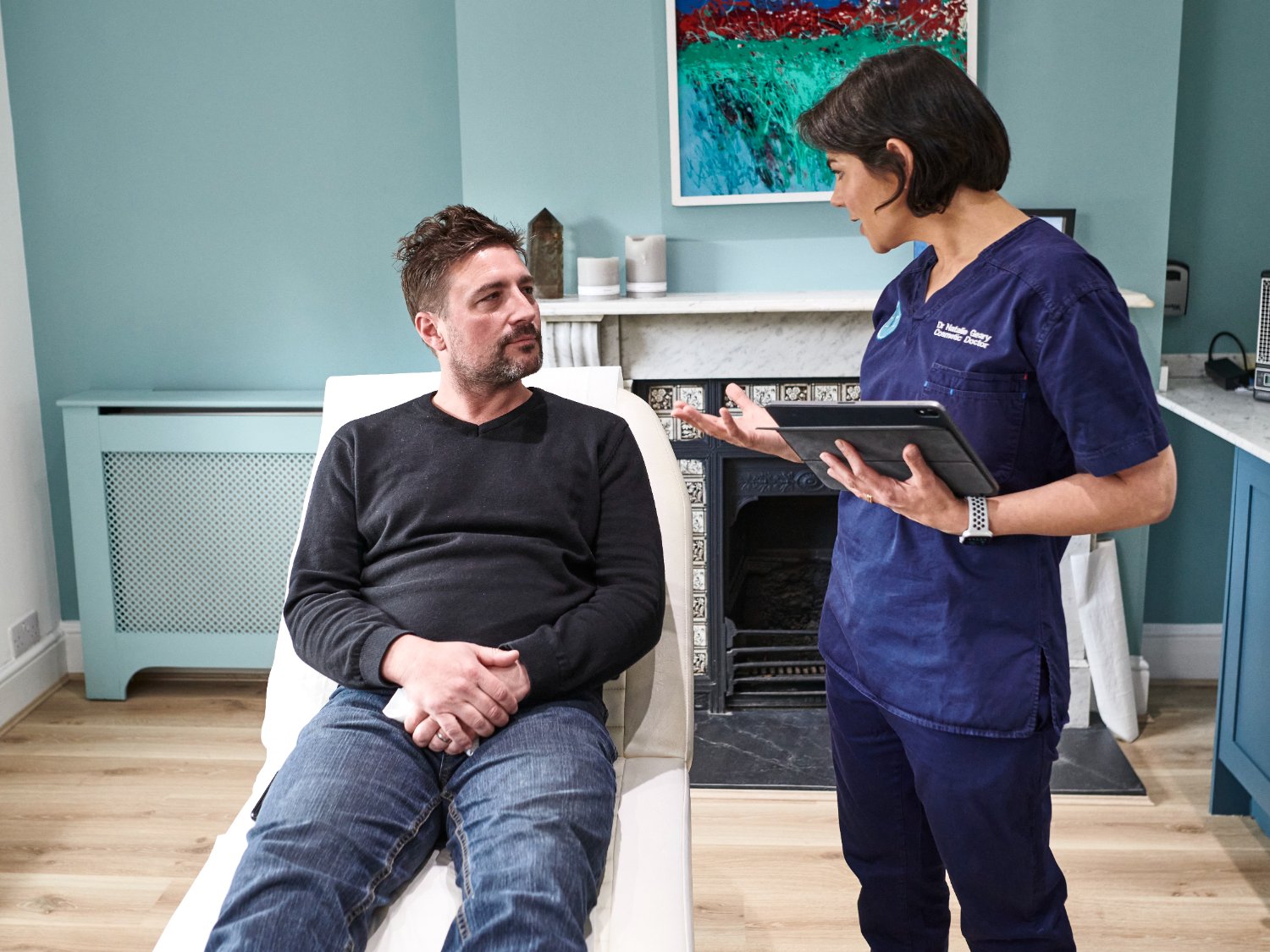
Who injects you matters more here than for most treatments. At Light Touch Clinic, non-surgical rhinoplasty is carried out by our Medical Director, Dr Natalie Geary, and our nurse prescriber, Louise Walsh, in our CQC-registered clinic, which means we’re inspected against the same standards as any other healthcare provider.
We use hyaluronic acid fillers exclusively, chosen partly because they can be dissolved with hyaluronidase if necessary, and we keep hyaluronidase on site. Our dermal filler dissolving page explains how that works.
Whether you come to us or go elsewhere, we’d encourage you to ask three questions before anyone injects your nose.
What is your medical background?
What is your protocol if something goes wrong?
Do you have hyaluronidase in the room?
A practitioner with good answers won’t mind being asked. One without them is telling you something.
Since 2021, it has been illegal in England to give cosmetic filler to anyone under 18, and the Government has confirmed plans for a licensing scheme covering non-surgical cosmetic procedures, although it isn’t yet in force.
The nose is an area where experience and complication planning really matter. Knowing the anatomy is the job, and having a plan for the day it doesn’t go as expected is the rest of it.
Non-Surgical vs Surgical Rhinoplasty
Filler is faster, with results on the day and a return to your routine the same afternoon. It isn’t permanent, which cuts both ways: you’ll need further treatment to keep the result, but you’re not committed to it. Some patients use it to see how a straighter profile looks before deciding whether surgery is worth it.
Surgery is the answer when the goal is to make a nose smaller or narrower, to correct a breathing problem or a deviated septum, or to change the underlying bone and cartilage. It involves a general anaesthetic, a recovery measured in weeks and a permanent result. We don’t offer it, but if surgery would serve you better, we’ll say so. The NHS puts the cost of surgical nose reshaping in the UK at £4,000 to £7,000, plus consultations and any follow-up care.
| Non-Surgical Rhinoplasty | Surgical Rhinoplasty | |
|---|---|---|
| What It Changes | Adds volume to refine the profile | Reshapes or reduces bone and cartilage |
| Can It Make the Nose Smaller? | No | Yes |
| Can It Fix Breathing Problems? | No | It can, where there’s a structural cause |
| Anaesthetic | Numbing cream | General anaesthetic |
| Recovery | Most people return to their day | Measured in weeks |
| How Long It Lasts | 6 to 18 months | Permanent |
| Can It Be Reversed? | The filler can usually be dissolved | Only with further surgery |
| Cost | From £500 at Light Touch Clinic | £4,000 to £7,000 (NHS figure) |
FAQs
How long does non-surgical rhinoplasty last?
Non-surgical rhinoplasty usually lasts between 6 and 18 months, depending on the product and how quickly you metabolise filler.
How much does non-surgical rhinoplasty cost?
Non-surgical rhinoplasty at our clinic starts from £500, and it’s the same price whether you’re treated by our doctor or nurse prescriber. The final cost depends on how much filler your nose needs, which we assess and confirm at consultation. Consultations are £50, redeemable against treatment.
How much filler does a nose need?
There’s no typical amount. Some noses need only a tiny correction of around 0.1ml; others need a little more. We rarely go as high as 1ml, and we’ll tell you at consultation how much yours is likely to need.
What filler do you use for non-surgical rhinoplasty?
A very light, soft hyaluronic acid filler, used in tiny amounts. Like all the hyaluronic acid fillers we use, it can be dissolved with hyaluronidase if needed.
Can I have nose filler after a surgical rhinoplasty?
Sometimes, but it needs more caution. Surgery changes the nose’s blood supply and leaves scar tissue, both of which raise the risk, so we assess carefully and may advise going back to your surgeon instead.
Can nose filler spread or make my nose look wider?
It can if too much is used, or if top-ups are repeated without review. Small volumes placed at the right depth are much less likely to move, and reviewing before we treat again is how we avoid a nose gradually widening over the years.
When can I wear glasses after nose filler?
Keep glasses off the bridge of your nose for one to two weeks while the filler settles, because pressure from the frames can shift it. Contact lenses are fine in the meantime.
Can non-surgical rhinoplasty fix a breathing problem?
No. Filler changes the outside shape of the nose and can’t correct a deviated septum or open the airway. If you have a breathing problem, it’s worth seeing your GP, as surgery is usually the route for that.
Talk to our medical team
Book a £50 consultation, redeemable against treatment, and we will assess what you actually need, including whether treatment is right for you at all.
Talk It Through With Us
Come in with whatever it is you’d change about your nose. We’ll show you what filler can realistically do for it, including whether it’s worth doing at all. Full treatment details are on our non-surgical rhinoplasty page, or you can book a consultation with us directly.
Non-surgical rhinoplasty is available to patients aged 18 and over. Results vary from person to person. All treatments follow a medical consultation.