Patients often come into the clinic asking for BBL or MOXI by name. Sometimes they’ve chosen well. Just as often, once we look at their skin and ask what is actually bothering them, we find that another treatment makes more sense. Sometimes we recommend both.
The simplest way we explain the difference is to think of BBL as primarily our colour corrector and MOXI as our texture refiner. BBL HEROic is useful when brown pigmentation, sun damage or redness is the problem. MOXI comes into its own when we are looking at rougher texture, visible pores, fine lines and early changes in skin quality.
There is overlap, especially where pigmentation is concerned, so skin rarely fits perfectly into one column or the other. One other distinction is worth clearing up. BBL HEROic is often called a “BBL laser”, but technically it isn’t a laser. It uses BroadBand Light, which sits within the IPL family. MOXI is a non-ablative fractional laser.
What We Treat With BBL
Someone tilts the mirror towards the window and points at the spots across their cheekbones. That is very often a BBL conversation. We often consider BBL when the concern is colour, such as brown sun spots, freckling that has become more obvious with time, patchy sun damage, redness or small visible vessels around the nose and cheeks.
For brown marks and uneven colour, you can read more about how we assess pigmentation. We also regularly see patients whose main concern is persistent facial redness associated with rosacea.
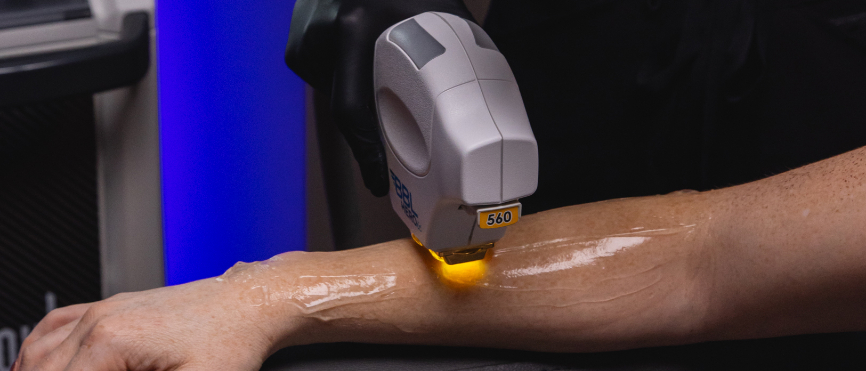
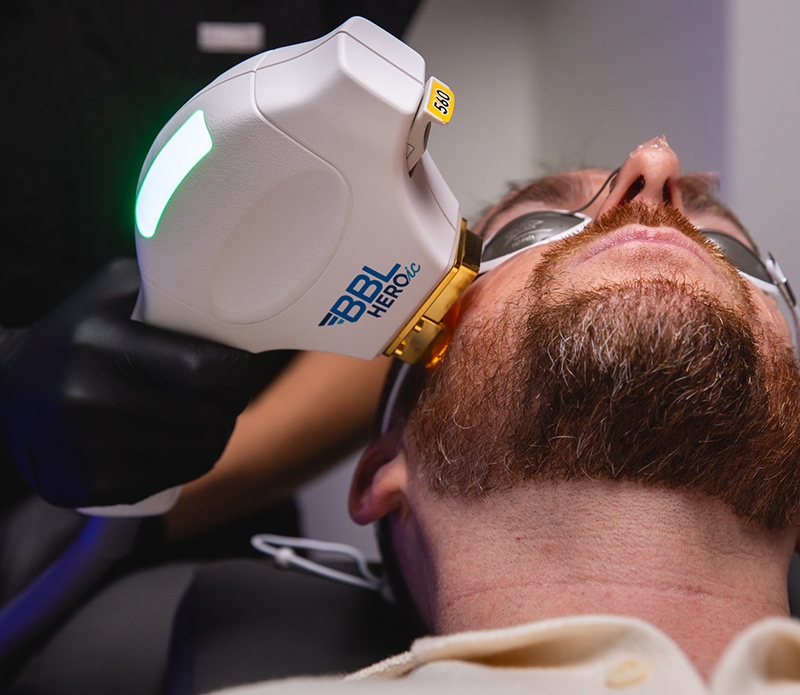
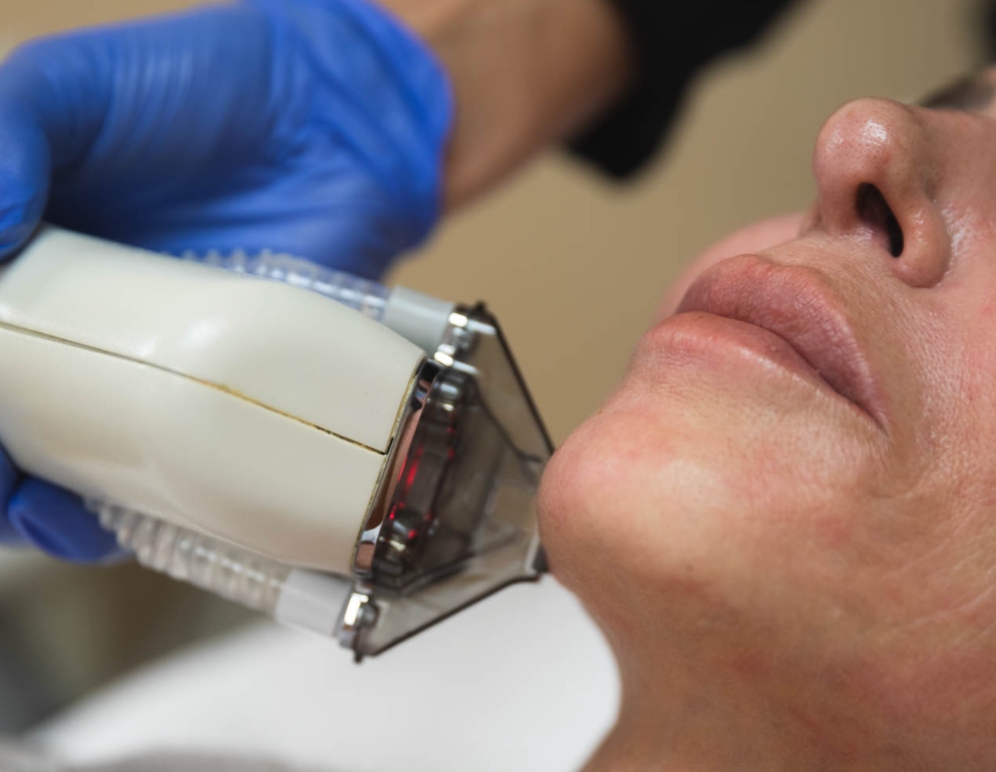
BBL delivers controlled pulses of broad-spectrum light, with the wavelength and settings chosen according to what we are treating. During the session, most patients describe quick flashes of warmth or a light snapping sensation against the skin. Cooling built into the handpiece helps make treatment more comfortable.
If we have treated brown pigment, the marks can become darker and more sharply defined before they begin to fade or flake. That doesn’t necessarily mean anything has gone wrong. It is an expected part of recovery after treating certain pigmented lesions, and we would rather explain it before you see it in the mirror the following day.
What We Treat With MOXI
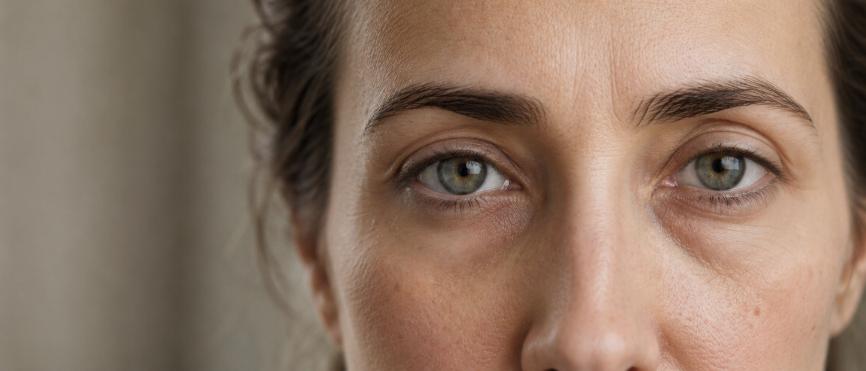
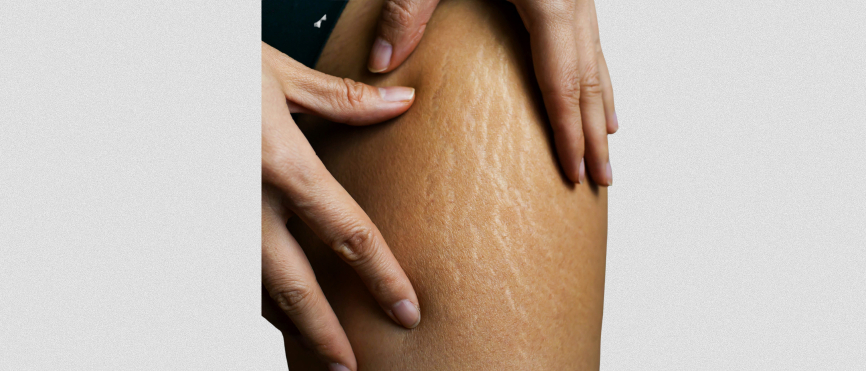
MOXI consultations often sound different. Instead of pointing to one brown spot, a patient might tell us their pores seem more obvious, their skin feels rougher than it used to, or their makeup doesn’t sit quite as smoothly. Fine lines and early sun damage can be part of that picture too.
MOXI uses a 1927 nm non-ablative fractional laser to create thousands of microscopic treatment zones while leaving surrounding tissue untreated. We use it to improve uneven texture, visible pores and fine lines, as well as general skin quality. Those tiny zones trigger the skin’s repair response, which stimulates collagen over the weeks that follow.
That makes it relevant for patients beginning to notice fine lines and wrinkles as well as people considering lighter skin resurfacing.
MOXI is also frequently described as a “prejuvenation” treatment. We prefer to explain what that actually means. Some younger patients don’t have extensive sun damage or deeper lines to correct, but they have begun noticing subtle changes in texture and want to look after their skin as those changes take place.
Which One Does Your Skin Need?
Stand near a window in daylight, without makeup, and notice what catches your eye first. Brown or red areas, such as spots, patches, blotchiness or flushing, tend to point us towards BBL. If it is pores, roughness, fine lines or the general surface of the skin, MOXI is more likely to lead the discussion.
However, plenty of patients notice both colour and textural changes. There are also reasons we can’t decide this from a checklist alone. We need to know what type of pigmentation we are looking at. An isolated sun spot isn’t the same as melasma or post-inflammatory pigmentation, and treating every brown mark as though it behaves identically would be poor practice.
Skin tone matters too. So do recent sun exposure, medical history, medication, your current skincare and whether your skin tends to develop pigmentation after inflammation. Suitability and treatment settings genuinely differ, so we aren’t going to publish a “BBL vs MOXI by skin type” table that pretends otherwise.
There are practical reasons we might postpone treatment or recommend something else, too. A fresh tan or significant recent sun exposure can affect whether BBL is appropriate, while pregnancy, certain medications, active skin conditions and other medical factors may change what we can safely treat. And sometimes the concern you bring us simply isn’t something BBL or MOXI is particularly good at. In that case, we’d rather tell you and suggest a better option.
This is exactly what your consultation is for. We look at your skin properly, listen to what you want to change and decide whether BBL, MOXI, a combination of the two or another treatment makes more sense.
When We Combine BBL and MOXI
Real skin doesn’t always give us one problem at a time. You might have sun spots across the cheeks but also enlarged pores and a rougher surface.
That is where combining the two can make sense. BBL can address the visible colour changes while MOXI works on the textural side of the same problem. That allows us to build a plan around both concerns rather than expecting one device to do everything.
In eighteen years of running this clinic, I’ve learned that the best measure of a treatment is not the brochure; it’s the results our patients get. When Sciton asked to use Sammy’s BBL and MOXI before-and-after photos, that told us everything about the standard she works to.
For suitable patients, we can perform BBL and MOXI in the same appointment. When we do, BBL is generally performed first, and MOXI follows.
That doesn’t mean everybody should automatically have both at once. We may choose to separate them if your skin is reactive, if we want to see how you respond to one treatment first or if your diary makes a gentler recovery period more practical.
The course itself is personalised too. Someone with a few obvious sun spots is starting from a very different starting point to someone with broader sun damage, redness and textural change. We review how your skin responds rather than forcing everybody through the same number of appointments.
You can read more about the combination on our BBL HEROic and MOXI treatment page.
Downtime and Recovery for BBL vs MOXI
“Minimal downtime” only tells you so much. What many patients want to know is what their face may look and feel like tomorrow.
After BBL, the skin can look pink and feel warm for a while, rather like mild sunburn. For many people, that settles quickly enough that normal day-to-day life isn’t much of a problem.
Pigmentation is the part that tends to catch people out. Treated brown spots can darken considerably before they start to fade and flake. They may look more obvious for several days, especially if we have treated a noticeable area of sun damage. Don’t pick or scrub at them.
MOXI has a more distinctive recovery phase. Immediately afterwards, your skin can feel hot and tight, and look red. Over the next couple of days, tiny dark dots known as MENDs (Microscopic Epidermal Necrotic Debris) can appear, and the skin starts to feel dry and rough.
The sandpaper phase is the bit people remember. It can feel surprisingly coarse when you run your fingers over your face, even if it does not look particularly dramatic from across the room. Those tiny treated areas then shed naturally over the following days. Picking, exfoliating or trying to speed that process up isn’t helpful.
Makeup can generally be worn after 24 hours if the skin is recovering normally and you follow the aftercare advice we give you.
If we combine BBL and MOXI, you may have both happening at once: darker BBL-treated pigment and the dry, sandpapery MOXI texture. It’s manageable, but not invisible.
If you are fitting treatment around work, school runs, a wedding, travel or a weekend where you really don’t want people asking what you have done to your face, tell us. We can discuss timing, intensity and recovery before we treat you.
How BBL Differs From Standard IPL
BBL sits within the IPL family. BBL HEROic is Sciton’s BroadBand Light platform, while our standard IPL treatment uses the Lynton Excelight system.
Both can be used for concerns involving pigmentation and visible vessels. Which one we suggest depends on the concern, your skin and the treatment plan rather than which technology sounds newer.
Frequently Asked Questions
What’s the difference between BBL and MOXI?
We mainly use BBL to address colour concerns such as sun damage, brown pigmentation and redness. MOXI is a 1927 nm non-ablative fractional laser that we use more for texture, visible pores, fine lines and early changes in skin quality.
There is some overlap between them, especially with pigmentation, so we still assess your skin before deciding which is the better fit.
Can you have BBL and MOXI in the same session?
Yes. For suitable patients, we would generally perform BBL first and MOXI afterwards.
Combining them can be useful when both colour and texture need attention. We don’t treat the combination as the default, though. Sometimes spacing the treatments is more appropriate.
Which should you have first, BBL or MOXI?
If you mean within a combined appointment, we would generally perform BBL first and MOXI afterwards.
If you mean which treatment you should begin with, brown pigmentation or redness typically points us towards BBL, while pores, roughness, fine lines and textural concerns tend to point more towards MOXI.
We confirm that once we have actually seen your skin.
How many BBL or MOXI sessions do you need?
There is no useful single number for everybody. The number of sessions depends on what we are treating, how established the concern is, the settings we can safely use and how your skin responds. Established or widespread concerns usually need a course of sessions. A single isolated area may need only one or two.
We prefer to review your progress rather than commit every patient to an identical block of appointments before treatment has even started.
What’s the downtime for BBL vs MOXI?
BBL usually involves some temporary warmth or redness, while treated brown pigmentation can become darker before it fades or flakes.
MOXI tends to produce a more noticeable textural phase, with redness followed by dryness and a rough, sandpapery feel for several days. Makeup can often be worn after 24 hours if recovery is progressing normally.
The intensity of treatment makes a difference, so we can give you a more useful idea of what to expect once we know how we intend to treat your skin.
How much do BBL and MOXI cost?
It depends on the area we’re treating, whether we’re using one device or both, and how many sessions your plan needs, which is why we price after consultation rather than publishing one figure.
Talk It Through With Us
You don’t need to work out whether you need BBL or MOXI before you come in. That is our job.
“What I love about BBL HEROic and MOXI is how naturally they enhance skin. It’s not about changing your face. It’s about restoring clarity, smoothness and that well-rested look our patients ask for every day.”
Selma van den Bosch, Practice Manager
At your consultation, we’ll look at the colour and texture of your skin, talk through what you actually want to improve and take into account your skin history, recent sun exposure, previous treatments and the amount of downtime that works for you.
From there, we can suggest BBL, MOXI or a combination and tailor the settings to you.
Read more about BBL HEROic and MOXI at Light Touch Clinic or get in touch to arrange a consultation.