You catch yourself in the bathroom mirror or on the front camera during a video call, and there it is again.
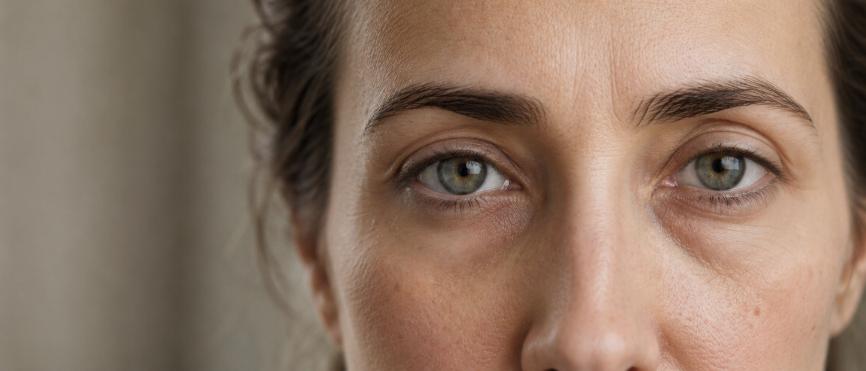
That tired, shadowed look under your eyes that no amount of sleep seems to shift. All of it gets called dark circles. But at least three separate things hide under that one name, and they behave in completely different ways.
That’s why the eye cream a friend swears by does nothing for you, and why one person is transformed by a treatment that leaves another disappointed. They were never dealing with the same problem in the first place.
None of this is a diagnosis. Mixed causes are common, and only a proper assessment can confirm what is going on with your under-eye area.
Why “Dark Circles” Is Really Three Different Problems
Under-eye darkness often comes down to one of three mechanisms, sometimes all at once.
Shadow is the surface sinking rather than the skin changing colour, so light no longer reaches it.
Pigmentation is the skin itself darkening, through genetics, sun exposure or years of rubbing at it.
Translucency is skin thin enough that the vessels beneath show through, blue rather than brown.
Puffiness is a fourth player that muddies everything. Eye bags are a swelling problem rather than a colour problem, but a raised bag casts its own shadow directly beneath it, which reads in the mirror as a dark circle.
Most people are a blend. That’s precisely why identification has to come before treatment, and why adding volume to skin that’s actually pigmented is a well-known route to disappointment.
How to Spot a Tear Trough Hollow
The tear trough is the groove running from the inner corner of the eye down towards the cheek. With age, fat pads in the midface descend and lose volume, the bony orbit gradually widens, and the ligament tethering the skin along this line stays put. The result is a step, a dip and a shadow that sits in it.
Shadow behaves like shadow. It shifts when you change the lighting. Stand under a bright overhead bulb, and it deepens; face a window, and it softens dramatically. Tilt your chin up, and it may all but vanish. It also lifts if you gently press the skin just below the groove to support it.
Where hollowing is the main cause, carefully placed tear trough filler may be considered to soften the transition between the lower eyelid and cheek. You can see how that translates in practice in our tear trough before and after gallery.
Skin with significant laxity, a tendency towards fluid retention or prominent fat pads can all be made to look worse rather than better by filler. If you’d like the mechanics in more detail first, our explainer on dermal fillers for tear troughs covers the ground.
Not everyone is suitable. At an in-person assessment, a doctor watches how the area behaves under different light and gentle pressure, and tells you honestly whether filler is the right answer.
Pigmentation: When the Skin Itself Is Darker
Periorbital hyperpigmentation is a genuine excess of melanin in the skin around the eye, and it’s a common cause of under-eye darkness. Contributing factors include heredity, cumulative sun exposure and hormonal shifts. Another factor is chronic rubbing, often driven by eczema or seasonal allergies, where friction and inflammation slowly encourage the area to darken.
Presentation varies with skin tone. In deeper skin tones, pigmentation tends to be the dominant cause and can extend as a broader, well-defined patch across the lower lid and sometimes the upper lid too. In fairer skin tones, vascular and structural causes are more often to blame, though pigmentation certainly still occurs.
Pigment doesn’t care about the light. Move to a window, change the angle, lift the skin. The colour stays exactly where it is.
If it survives every trick you can play with lighting, you are likely looking at pigment.
Approaches that improve the skin rather than reshape it are most helpful. Regenerative injectables such as polynucleotides and PRP work gradually over a course of sessions to support skin quality and tone.
Alongside that, use topical skincare and daily broad-spectrum SPF, since UV exposure will steadily undo any progress you make.
Improvement in this category is measured in months, not days.
When Thin Skin Lets the Vessels Show
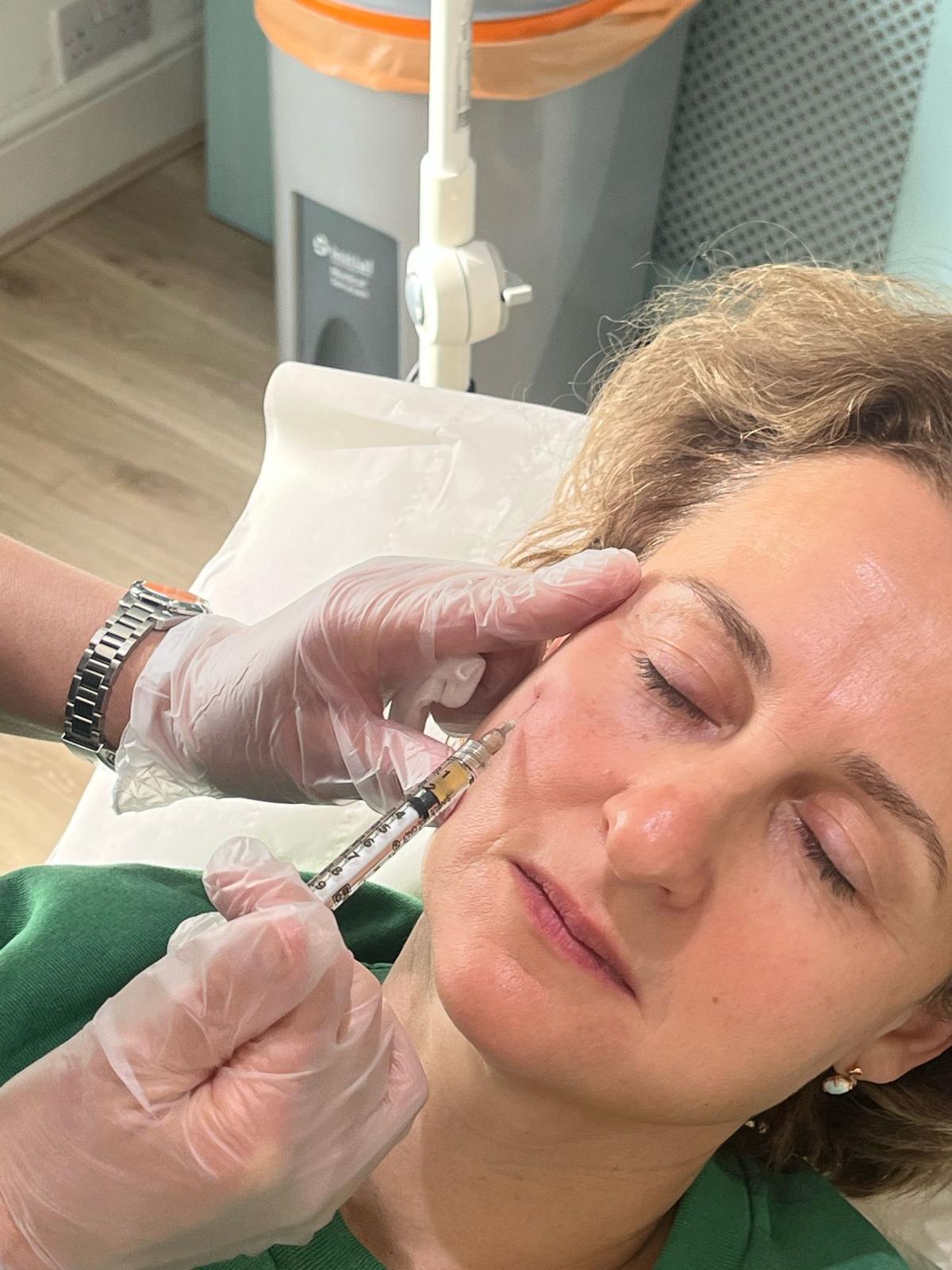
The skin around the eyelids is among the thinnest on the body, and it thins further with age. When it becomes translucent enough, the network of small vessels underneath starts to show through, giving a blue, purple or slate cast rather than a brown one.
Poor sleep, alcohol, allergies or sinus congestion can temporarily make the vessels more prominent, deepening the blue or purple tone beneath the eyes, which is why this type really does look worse after a bad night.
For the clue, stretch the skin outwards very gently at the outer corner. A vascular tint tends to become more obvious as the skin is drawn tighter and thinner, whereas pigment holds steady and shadow disappears.
Sleep, hydration and a night off the wine will improve things at the margins because they reduce vascular congestion. They will not make your skin thicker. For that, the useful options are the same regenerative treatments used for pigmentation: polynucleotides and PRP both work by encouraging the skin’s own repair processes, and may help build density in the dermis over a course of treatments.
Results develop gradually and may require maintenance.
Eye Bags Are Swelling, Not Colour
Bags are volume in the wrong place. Sometimes that’s fluid, pooling overnight while you lie flat and draining away as the day goes on. Sometimes it’s allergic, with congestion and rubbing making the whole area swollen and smudged. And sometimes it’s structural: with age, the septum holding the orbital fat pads in place weakens, and the fat itself bulges forward into a permanent contour.
Fluid and allergy-related puffiness fluctuates. It’s usually worst on waking, better by mid-afternoon, and worse again in high pollen season.
Age-related fat prolapse doesn’t fluctuate. It’s there at 8am and still there at 8pm. It’s the one type on this list that no injectable will resolve.
If your puffiness follows the seasons, our article on hay fever face explains the allergy route and what to do about it. For the age-related pattern, the tired eyes and eye bags page sets out what is realistically available.
Is It Something Other Than Your Skin?
Before pursuing any of this, there are medical contributors worth ruling out with your GP, particularly if the change has been recent or rapid, or if it comes with other symptoms.
Conditions such as iron deficiency anaemia or thyroid disease may contribute to pallor, tiredness or facial swelling, while eczema, allergies and persistent nasal congestion can cause inflammation, rubbing and puffiness around the eyes. Aesthetic treatment doesn’t address the underlying medical cause.
The NHS guidance on tiredness and fatigue is a sensible starting point if something feels systemic rather than skin-deep.
If you would like the area looked at properly, book a consultation with one of our aesthetic doctors. You will get an honest assessment of which type (or types) you are dealing with, and which treatment approach, if any, is most appropriate.
Frequently Asked Questions
What is the difference between dark circles and eye bags?
Dark circles are a colour and shadow issue; eye bags are a swelling and contour issue. A bag can cast a shadow that looks like a circle, which is why the two are so often confused, but the underlying causes and the treatments differ entirely.
How can I tell if my dark circles are pigmentation or shadow?
Change your lighting. Shadow softens or disappears when light hits the area directly or when you tilt your chin up; pigment stays exactly the same shade regardless of light or angle.
Does tear trough filler get rid of dark circles?
Only where the darkness is shadow from hollowing. Filler restores volume; it does nothing for pigment in the skin or vessels showing through it. The wrong candidate can make the area look heavier. This is one of the most common reasons patients are disappointed by the treatment, and it’s why suitability is assessed carefully.
Why are my under-eyes worse in the morning?
Lying flat overnight allows fluid to settle in the loose tissue around the eyes, and it drains once you are upright and moving. Puffiness that improves through the day is a fluid or allergy pattern rather than a structural one.
Can lifestyle changes fix dark circles?
They help at the margins. Better sleep, adequate hydration and reducing alcohol consumption may lessen temporary puffiness or vascular prominence. Daily SPF prevents pigmentation from worsening. None of them restore lost volume or thicken the skin, so lifestyle alone will rarely resolve a true under-eye concern.
When should I see a GP about dark circles?
If the shadowing has appeared or deepened recently rather than developing slowly over the years, or if it comes alongside persistent tiredness, pallor or facial puffiness, it’s worth seeing your GP first. Iron deficiency anaemia, thyroid problems and ongoing allergies can all contribute, and aesthetic treatment won’t address an underlying medical cause.
Separately, seek urgent advice if there is genuine eyelid swelling that is red, hot, painful, tender or blistered, or if you have eye pain or changes in your vision.