When the weather warms up, a bit of sweating is the body doing exactly what it should.
But if you are reaching for a third shirt before lunch, planning outfits around what hides the marks, or dreading a handshake because your palms are damp, that’s a different experience entirely. Summer tends to make this louder.
The good news is that this is common, rarely a sign of anything dangerous, and genuinely manageable. There is a whole spectrum of options, from small everyday changes through to clinical treatment, and most people find something that helps.
This guide explains what is actually going on, what you can try yourself, when it’s worth seeing your GP, and what the clinical routes involve.
In this article
What Counts as Excessive Sweating?
Everyone sweats. It’s how the body cools itself down when you are hot, exercising, nervous or unwell. The medical line is crossed when you sweat far more than your body needs to regulate its temperature.
This includes sweating when you are sitting still in a cool room, for example, or soaking through clothing without an obvious reason. When that happens regularly and interferes with daily life, it’s known as hyperhidrosis.
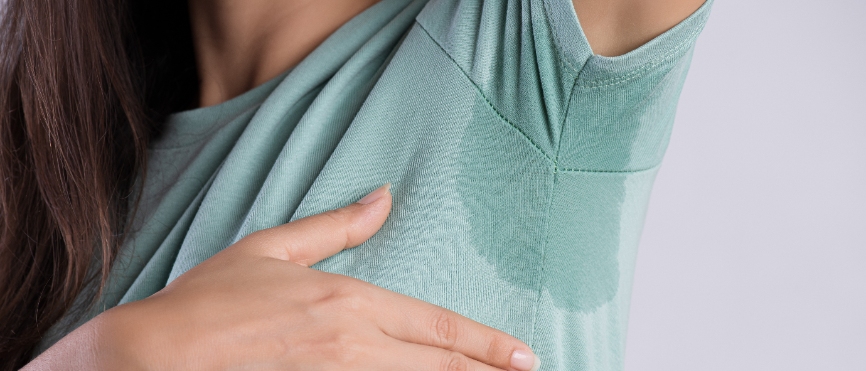
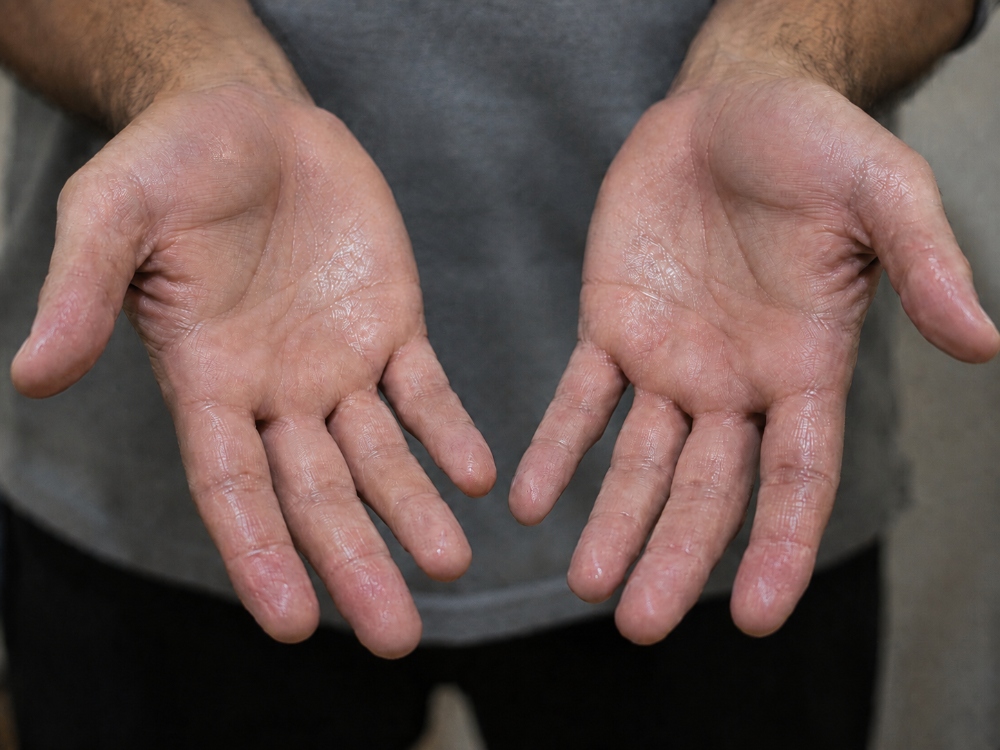
It usually shows up in specific spots where sweat glands are most concentrated: the underarms, the palms of the hands, the soles of the feet, and the face or scalp. It’s more common than many people think.
One large study estimated that around 4.8% of people are affected, with the underarms the single most commonly involved area. Only about half of those affected had ever raised it with a healthcare professional, often because they did not realise it was a recognised, treatable condition.
Excessive sweating is well known to affect confidence and day-to-day life, and many people describe anxiety about social situations, work or dating because of it. That impact is real and valid, not vanity, which is part of why it’s worth treating rather than just enduring.
There are two broad types, and the difference matters. Primary focal hyperhidrosis has no underlying medical cause. It tends to be symmetrical (both underarms, both palms), usually starts in childhood or adolescence, frequently runs in families, and typically does not happen while you are asleep.
Secondary hyperhidrosis is sweating caused by something else: another health condition (such as a thyroid problem, diabetes or menopause) or a side effect of medication. It often comes on more suddenly, tends to affect the whole body rather than isolated areas, and can include night sweats.
Why It Happens
In primary focal hyperhidrosis, the sweat glands themselves are healthy; the issue is the nerve signals that switch them on. The nerves that control sweating become overactive and tell the glands to keep producing sweat even when there is no need to cool the body down. Why this happens is not fully understood, but genetics play a clear part: roughly half of people with the primary type have a family member who experiences it too.
On top of that baseline, certain things reliably make sweating worse. Heat and humidity are the obvious ones, which is why summer feels so much harder. Stress and anxiety are powerful triggers, and they can create a frustrating loop. Worrying about sweating makes you sweat more. Caffeine, alcohol and spicy food can also push it up. Recognising your own pattern is useful because some of these are within your control.
Everyday Ways to Manage It
For milder cases, and as a sensible first step for everyone, a few practical changes make a real difference.
First, a quick distinction: deodorant masks odour, while antiperspirant actually reduces how much you sweat. If sweating is the problem, you want an antiperspirant, not a deodorant. A clinical-strength antiperspirant is worth trying before anything else. These contain a higher concentration of aluminium salts than standard deodorants and work by temporarily plugging the sweat ducts. The trick most people miss is to apply it at night to clean, dry skin, when the glands are least active, instead of in the morning after a shower.
Fabric and clothing choices help too. Breathable natural fibres such as cotton and modern moisture-wicking materials cope far better than synthetics like nylon. Looser fits show marks less, and darker colours and patterns disguise them. For sweaty feet, changing socks during the day and rotating leather shoes can make things more comfortable by reducing the likelihood of foot odour.
It’s also worth identifying and reducing your triggers, like cutting back on caffeine and alcohol, going easy on very spicy food, and finding ways to manage stress in situations you know set it off.
Be realistic about what these achieve, though. For mild sweating, they can be enough on their own. For moderate to severe focal hyperhidrosis, they tend to take the edge off rather than solve it. That is not a failure on your part, just a sign it may be worth looking at other options. The NHS guidance on excessive sweating provides more detailed information on these self-care steps.
Want to talk it through with a doctor?
If this is something you are dealing with, a consultation at our doctor-led clinic is a straightforward way to understand your options, with no obligation to treat.
When to See Your GP
Most excessive sweating is harmless, but some patterns are worth getting checked, because they can point to a secondary cause rather than primary hyperhidrosis. Book a GP appointment, rather than assuming it’s nothing, if:
- The sweating started suddenly or has changed noticeably
- You have night sweats that leave your bedclothes or sheets soaked
- The sweating affects your whole body rather than specific areas
- It comes alongside other symptoms, such as a fever, unexplained weight loss, a racing heartbeat or feeling generally unwell
- The sweating is one-sided or clearly uneven between the two sides of your body
- It began after starting a new medication
None of these means something serious is necessarily wrong, but they are reasons to have a proper assessment so any underlying cause can be ruled out or treated directly. If the sweating turns out to be secondary, treating the cause is often the right route.
Clinical Treatment Options
When antiperspirants and everyday measures are not enough, and a GP has ruled out an underlying cause, there are in-clinic options for stubborn focal sweating. The best known is an injectable treatment that temporarily interrupts the nerve signals telling the sweat glands in the treated area to switch on. With those signals quietened, sweat production in that area is significantly reduced.
This is a medical procedure, not a one-size-fits-all fix, so suitability is assessed individually at a private consultation before anything is recommended. It’s not right for everyone, and complete dryness cannot be guaranteed. The aim is a meaningful reduction in sweating in the treated area.
Results are not permanent: the effect usually lasts six months before it gradually wears off, at which point the treatment can be repeated. You can read more about the excessive sweating treatment we offer. We always discuss the options, the limits and what to expect at a consultation first.
Other Treatments Worth Knowing About
The injectable approach is the main option we offer, and we use it across the areas people most often struggle with: the underarms, hands, face and feet. It’s not the only clinical treatment that exists, though, and the right route can depend on how severe the sweating is and how you respond to earlier steps.
For the hands and feet, another well-established option is iontophoresis, which passes a gentle electrical current through the skin while your hands or feet rest in shallow water, reducing sweating over a course of sessions. It’s usually arranged through a GP or dermatologist, and some people use it alongside or instead of other treatments.
If a clinical-strength antiperspirant has not been enough, there are also prescription-strength options, both topical treatments and, in some cases, tablets that reduce sweating more widely across the body. Tablets help some people but can carry side effects, so they are prescribed and monitored by a doctor.
For severe sweating that has not responded to anything else, surgery is a last resort. It’s only considered once other routes have been exhausted. It carries its own risks and is decided with a specialist after a referral.
What Happens at a Consultation
A consultation is simply a conversation and an assessment. There is no obligation to go ahead with anything. Our practitioner will ask about your pattern of sweating: which areas are affected, how long it has been going on, what makes it better or worse, and how much it affects your day-to-day life.
Part of that is checking whether the sweating could be secondary to another cause, in which case we would point you towards a GP review first rather than straight to treatment.
If treatment is appropriate, we will talk you through your options honestly, including what they can and cannot achieve, and answer any questions. As a doctor-led, CQC-registered clinic, our priority is the right advice for you, even if that means advising you to start somewhere other than treatment.
Book a Consultation
If excessive sweating is wearing you down, you do not have to put up with it or work out the answer alone. Book a consultation with our team to talk through what is going on and what genuinely helps, from everyday measures to clinical options, in a calm, private setting.
Speak to our medical team
Book a consultation at our CQC-registered clinic in Weybridge to talk through your symptoms and options with a doctor, including when a GP referral is the better route.
Frequently Asked Questions
Is excessive sweating normal?
Sweating itself is completely normal and necessary. Excessive sweating is common, too. It affects a significant proportion of people, but when it happens without your body needing to cool down and interferes with daily life, it’s a recognised medical condition rather than just “natural” sweating, and there are things that help.
How can I stop sweating so much?
Start with the basics: a clinical-strength antiperspirant applied to clean, dry skin at night, breathable natural fabrics, and reducing triggers such as caffeine, alcohol, spicy food and stress. These manage milder sweating well. If they are not enough, clinical treatments can reduce sweating in the affected area, discussed and assessed at a consultation.
When should I see a doctor about excessive sweating?
See your GP if the sweating started suddenly, happens at night and soaks your bedding, affects your whole body, comes with other symptoms such as weight loss or a racing heart, is one-sided, or began after a new medication. These patterns can point to a treatable underlying cause worth checking.
What clinical treatments help excessive sweating?
For stubborn focal sweating, in-clinic options include an injectable treatment that temporarily reduces sweat-gland activity in the treated area. It’s not suitable for everyone, results last around six months and can be repeated, and suitability is always assessed at a private consultation first.