What Is LED Light Therapy for Acne and Redness?
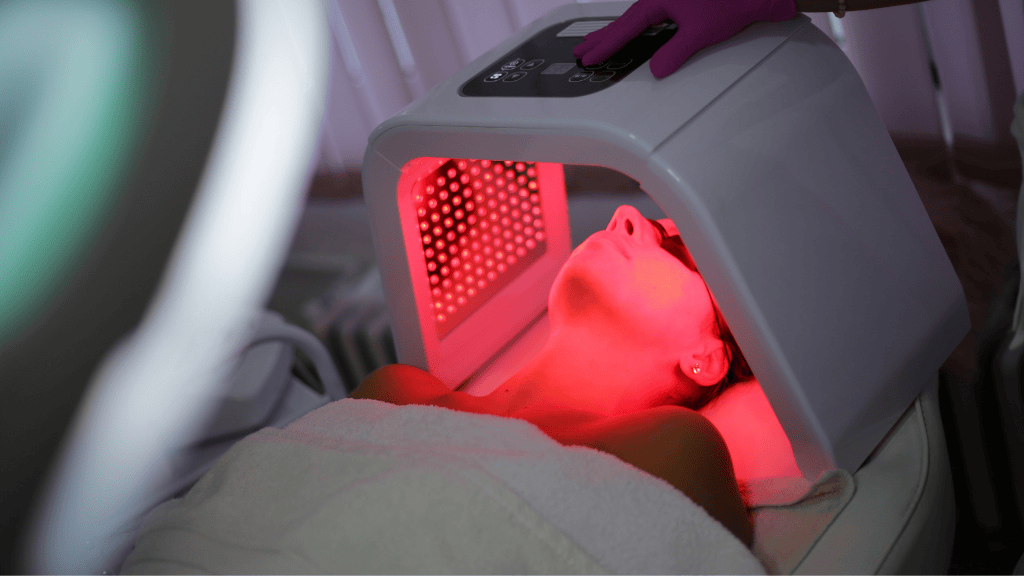
If you are struggling with breakouts and persistent redness, LED light therapy is a potential option for you. It is a non-invasive, zero-downtime treatment that uses specific wavelengths of light to support your skin’s natural repair processes. There are no needles, no heat and no recovery time involved.
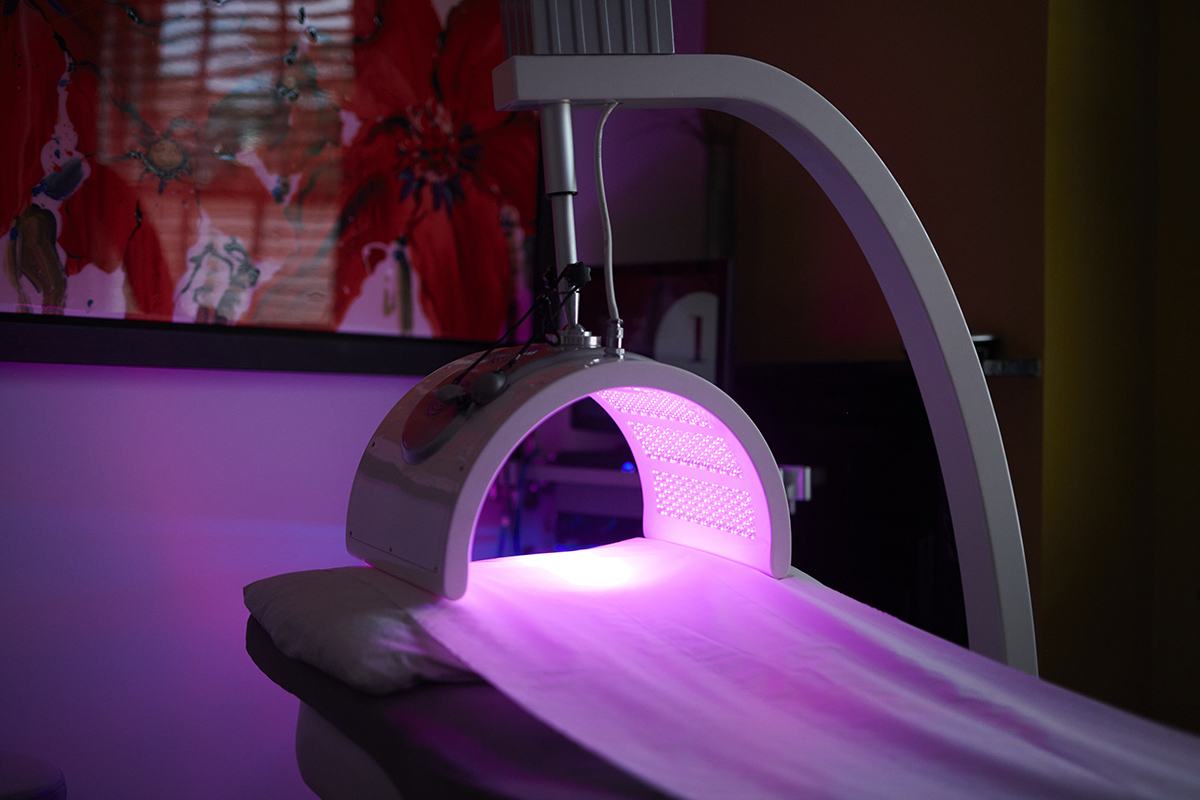
At our clinic in the heart of Weybridge, we use the Dermalux LED phototherapy system, which delivers red, blue, and near-infrared light simultaneously. For patients across Surrey dealing with skin that feels constantly reactive, it can form a genuinely useful part of a wider skin health plan.
The key word here is “part.” LED therapy works best when it is understood as a supportive, evidence-backed treatment.
In this article, we’ll explain what results you can achieve, where it fits within a treatment pathway, and when other interventions may be more appropriate.
How LED Light Therapy Works
Blue Light and Breakout-Causing Bacteria
The bacteria involved in cutibacterium acnes produce compounds called porphyrins as a by-product of their natural processes. Blue LED light at around 415nm triggers a reaction with those porphyrins that disrupts bacterial function, reducing the number of active bacteria on the skin’s surface and within the follicle.
This is why blue light is particularly useful for inflammatory acne. It does not address the underlying causes of acne, such as hormonal fluctuations or excess sebum production. Our treatment can meaningfully reduce the bacterial component, making it a helpful adjunct to other approaches.
Red Light and the Inflammation Response
Red light is typically delivered at around 630 to 660nm, and works through a process called photobiomodulation. It stimulates the mitochondria within skin cells, which are responsible for producing cellular energy. When those mitochondria are activated by red light, cells become better equipped to repair themselves. This allows your skin to manage inflammatory signals, and produce collagen and elastin more efficiently.
For patients with post-breakout redness, background flushing, or skin that is persistently reactive, red light offers a calming, supportive approach that does not irritate or stress the skin further.
Near-Infrared Light
The Dermalux system also delivers near-infrared light, which penetrates deeper into the tissue than either red or blue wavelengths. It supports vascular repair, reduces deeper inflammation, and assists with accelerating tissue recovery.
Where red light works primarily at the surface and mid-dermis, near-infrared light reaches the deeper layers of the skin where some of the more stubborn inflammatory processes take place.
For patients with persistent background redness, long-standing post-acne marks, or skin that has not responded fully to surface-level treatments, this deeper reach can make a meaningful difference to overall outcomes.
At Light Touch Clinic, we incorporate near-infrared light as part of a post-procedure LED session following microneedling or chemical peels. This results in calming deep tissue inflammation and accelerates the healing response to helps patients recover more comfortably.
The Evidence that LED Light Therapy Works
There is a growing body of peer-reviewed research supporting LED phototherapy for acne and inflammatory skin conditions. It’s considered one of the safest light-based treatments available, with a high tolerability profile across skin types.
Over 3,000 published studies support its safety, and it carries no risk of UV exposure. Results are gradual and consistent rather than dramatic, and work best as part of a broader, personalised plan.
Blue Light Therapy for Active Breakouts
LED Blue light therapy is most appropriate for patients with mild to moderate inflammatory acne. If your skin is producing regular papules and pustules, feels congested, or flares cyclically, a course of blue LED sessions can help reduce the frequency and severity of those breakouts over time.
It’s a useful option for patients who want to reduce their reliance on topical or oral antibiotics, or those who are in a transition period while other interventions take effect. Many of our patients at Light Touch Clinic incorporate blue LED as a maintenance tool between more intensive treatments.
Blue light does not address the hormonal, dietary, or sebaceous factors that drive acne.For patients with deeply cystic or nodular acne, it is unlikely to provide sufficient control on its own.
In select cases, a GP or dermatologist referral for prescription-grade treatment may be the more appropriate route. This will be discussed during your consultation, where we’ll recommend the best personalised treatment for you.
Red Light for Redness and Reactive Skin
Post-Inflammatory Erythema
The flat red or pink marks that remain on the skin after spots have healed are called post-inflammatory erythema, or PIE. They are not scars in the traditional sense, but rather superficial vascular changes that can take time to fade on their own.
Red light therapy can help reduce their intensity more efficiently by supporting vascular repair and cellular renewal in the area.
Redness and Skin Sensitivity
Red LED light can help calm the inflammatory response and support a healthier skin barrier over time. We often recommend it for patients whose skin is too sensitive to tolerate more active clinic treatments without adequate preparation or recovery support.
LED is not a medical treatment for diagnosed rosacea. Our treatments are designed for patients experiencing rosacea-adjacent symptoms, persistent flushing, or diffuse facial redness without a confirmed diagnosis.
This allows you to form a genuinely supportive plan that helps rejuvenate your skin. Our team has extensive experience working with patients in exactly this situation and will always make you feel comfortable.
Sensitive and Reactive Skin
LED is one of the very few clinic treatments suitable for highly reactive skin. It can be used comfortably because there is no chemical exposure, no thermal energy, and no physical trauma involved.

Where LED Fits in a Treatment Plan
As a Standalone for Mild Concerns
For patients with mild inflammatory acne or low-grade background redness, a standalone course of Dermalux LED is recommended. We recommend 10 sessions at our Weybridge clinic to produce meaningful and visible improvement to your skin.
The best starting point for patients new to clinic treatments or looking for a gentle, low-commitment entry into their skin health journey.
Chemical Peels
Chemical peels are one of the most effective clinical treatments for active acne and post-acne pigmentation. They work by removing the outer layers of dead and congested skin, promoting cellular turnover, and reducing the conditions in which bacteria thrive.
LED sessions can work with a peel course to reduce bacterial activity between treatments and help the skin recover more comfortably after each peel.
We offer a range of chemical peels and can advise during your consultation whether a combined approach would suit your skin.
INTRAcel Microneedling
Our INTRAcel treatment creates controlled micro-channels in the skin that stimulate the body’s natural healing response and collagen production. It’s particularly useful for acne scarring and textural concerns.
Adding red LED after a microneedling session can reduce post-treatment inflammation, speed up recovery, and support the collagen-building process. Many of our patients find that pairing the two produces more comfortable and consistent results.
Prescription Skincare
Patients using prescription-grade topicals, such as retinoids or antibiotic gels, sometimes experience a transitional period of increased sensitivity or initial purging.
Red LED can help manage that sensitivity, keeping the skin calm while the active ingredients take effect.
Our medical team can discuss prescription skincare options during a skin health review.
Post-Procedure Recovery Support
One of the most established uses of red LED in clinical practice is as a calming, recovery-support treatment after more intensive procedures.
We regularly use it following microneedling, peels, and other treatments to reduce visible redness, support skin barrier repair, and help patients return to normal more quickly.
As Ongoing Maintenance
Once a course of treatment is complete, monthly LED sessions can help maintain the skin’s improved condition. They keep bacterial activity in check, support inflammation management, and contribute to long-term skin resilience.
For patients whose skin is prone to seasonal fluctuations or hormonal flares, regular maintenance often makes a noticeable difference.
LED Light Therapy at Light Touch Clinic, Weybridge
We deliver Dermalux LED phototherapy from our clinic at 50 Church Street, Weybridge, Surrey.
The Dermalux system is one of the most advanced medical-grade LED devices available and is trusted by clinics and clinicians across the UK.
Each session takes around 30 minutes. You will recline comfortably under the Dermalux canopy, wearing protective eyewear, while the device delivers your tailored combination of wavelengths. The experience is warm, relaxing, and completely painless. There is no downtime, no residue, and no need to adjust your day around it.
Sessions are priced from £50. For acne or redness management, most patients begin with a course of ten sessions, typically bi-weekly. This is followed by a review and ongoing maintenance as appropriate. Your treatment plan will be personalised to your skin and goals.
We are easily accessible for patients across Surrey, including Esher, Walton-on-Thames, Cobham, Guildford, and the surrounding areas.
An Honest Assessment of LED Light Therapy
We believe that transparent, honest communication is part of providing excellent patient care.
LED therapy is a genuinely useful treatment, but it has clear limitations that every patient should understand before committing to a course.
It’s not appropriate as the primary intervention for severe, cystic, or nodular acne. These presentations require dermatological assessment and often respond best to prescription-level care, including oral antibiotics, hormonal treatment, or isotretinoin under GP supervision. If we feel that your acne falls into this category during your consultation, we will say so, and we will support you in accessing the right pathway.
LED Light Therapy will not produce results that last indefinitely without maintenance. The skin continues to produce bacteria, respond to hormonal shifts, and react to environmental stressors. Results need to be maintained with periodic sessions and a consistent homecare routine.
LED Light Therapy is also not a replacement for an appropriate daily skincare regime. It is used alongside clinically proven products, such as those from our ZO Skin Health, SkinCeuticals, or ZENii ranges.