It’s typical to notice a small lump, bump or raised area on the skin and immediately wonder: What is it? Should I be worried?
In most cases, lesions like skin tags, milia and common warts are benign (harmless). However, knowing what’s safe to remove and when to look for medical advice is important. This guide provides a straightforward, safety-focused overview to help you understand your next steps.
Please note: this article is simply intended to provide information and is not a diagnostic tool. Any new, changing or concerning lesion should be assessed by a medical professional.
In this article
A Simple Guide to Common Benign Skin Lesions
Many common skin growths are non-cancerous and can be removed in a clinical setting, provided a doctor has properly assessed them.
Below is a general guide to some of the most common benign lesions we see in the clinic.
Skin Tags (Acrochordons)
Skin tags are soft, flesh-coloured or slightly darker growths that often hang from the skin. They commonly appear in places of friction such as the neck, underarms, groin or eyelids.
They are normally painless but may become irritated if caught on clothing or jewellery. Skin tags are harmless and extremely common, especially as we age.
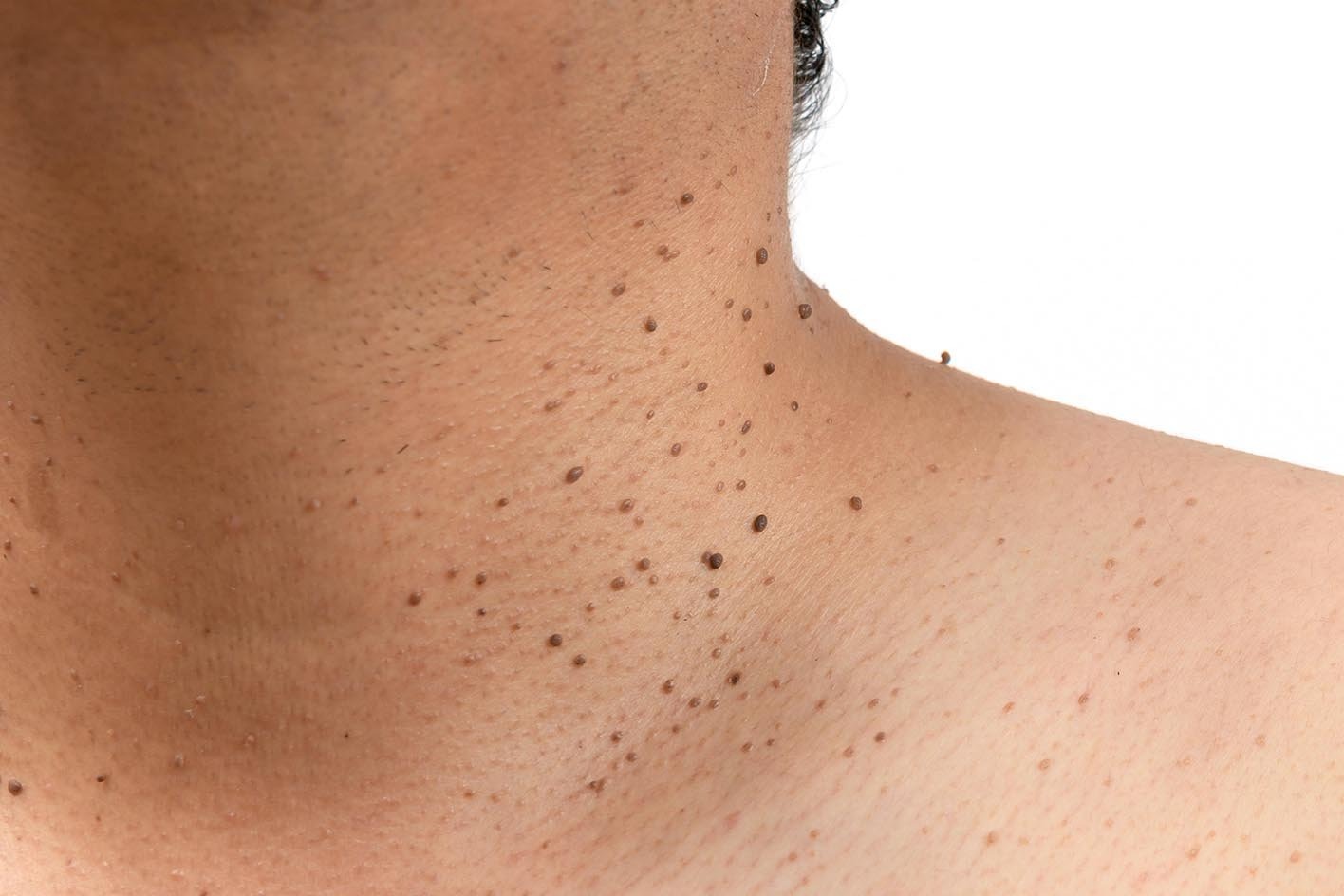
Image credit: NHS
If a skin tag is uncomfortable, continually irritated, or damaging your confidence, professional skin tag removal can be a simple solution following an appropriate assessment. Book a consultation with us to have your skin tag safely assessed and, where suitable, removed in a sterile clinical setting with clear aftercare guidance.
Milia
Milia are tiny white or yellowish cysts that form just beneath the skin’s surface, usually near the eyes or on the cheeks.
They are not spots, infections or a sign of poor hygiene. Milia form when keratin becomes trapped beneath the skin. Unlike whiteheads, they cannot be safely squeezed at home.
To prevent trauma and scarring, milia removal should always be conducted by a trained specialist using sterile techniques.
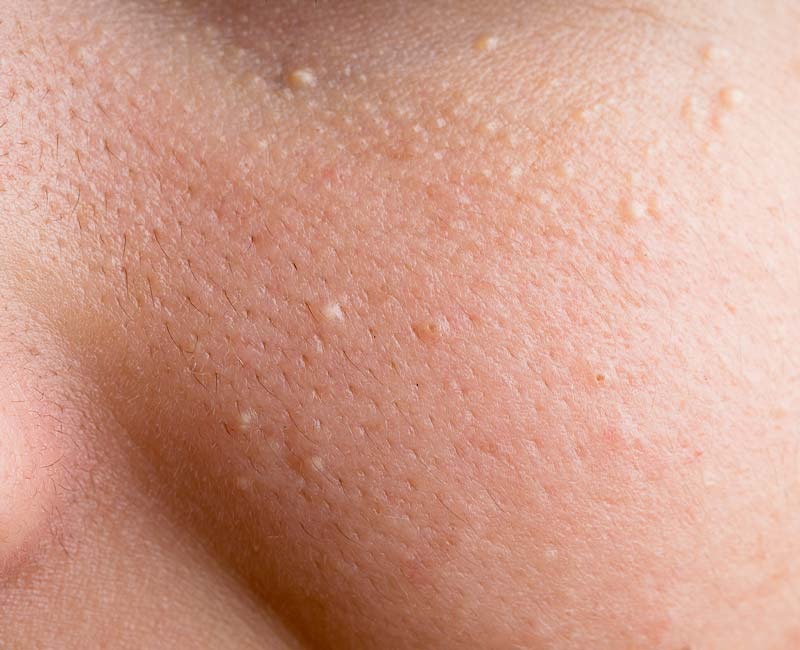
Credit: Cleveland Clinic
Common Warts
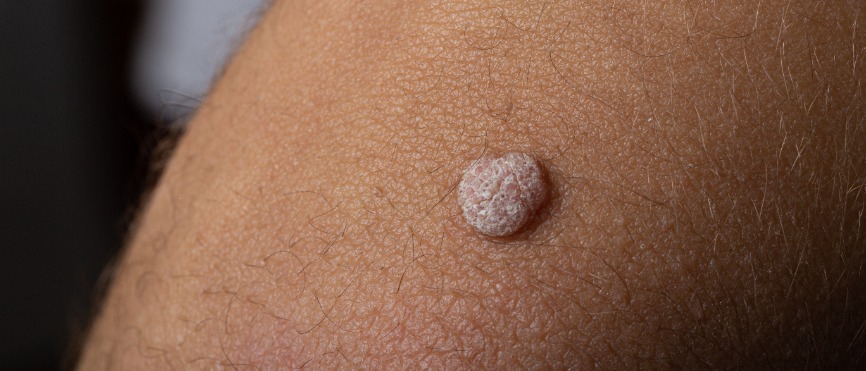
Warts are small, rough growths caused by certain strains of the human papillomavirus (HPV). They may have a cauliflower-like texture and occasionally display tiny black pinpoints.
Warts can spread through direct contact and may last for months or even years. While some go away on their own, others become uncomfortable or aesthetically concerning.
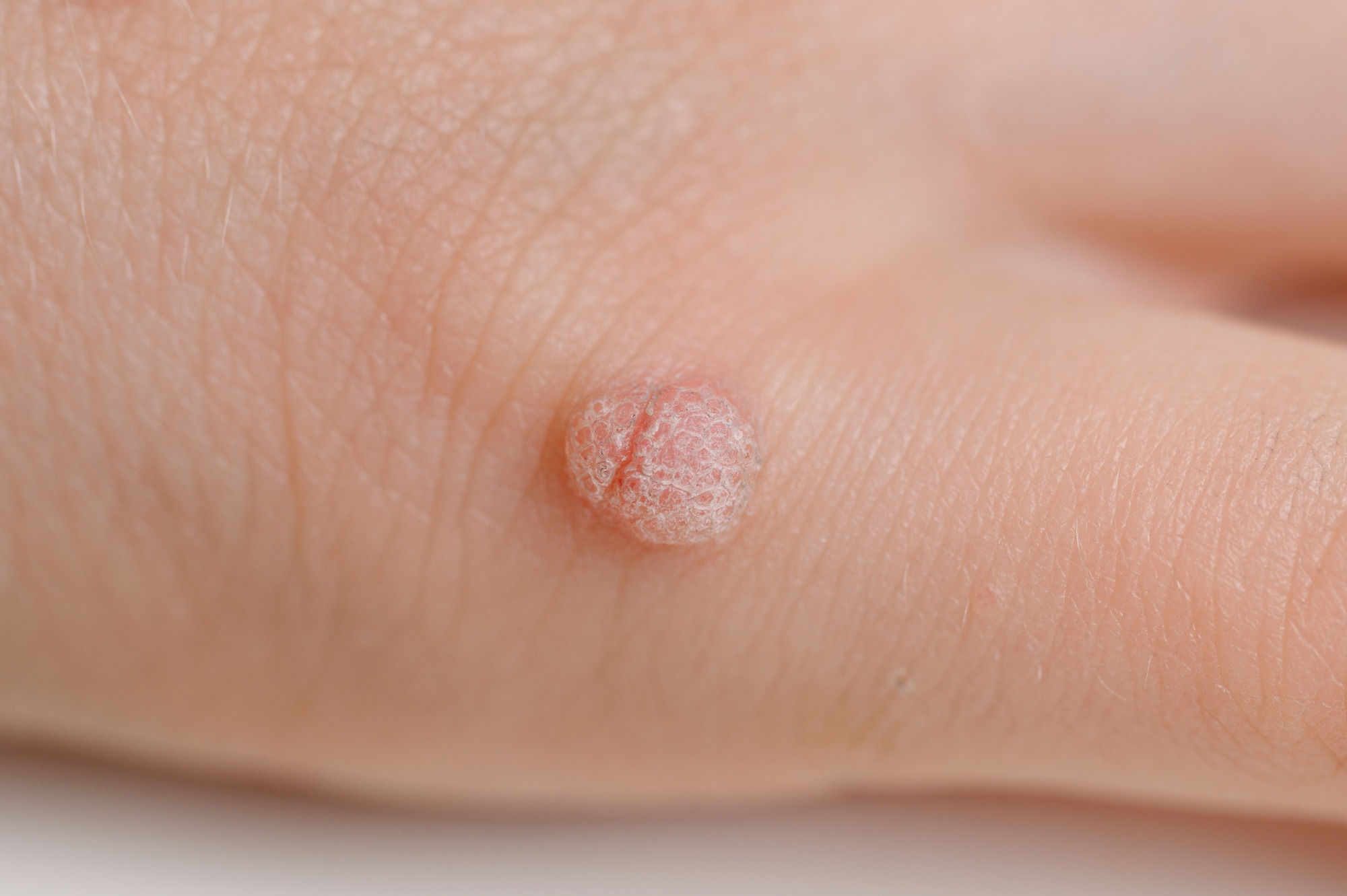
Professional wart removal may be appropriate where lesions are persistent, spreading or causing discomfort. Book a consultation with us for a professional assessment and, where suitable, safe removal in our Weybridge clinic with clear guidance on healing and aftercare.
Other Harmless Lumps
Other common benign lesions include seborrhoeic keratoses (commonly referred to as “stuck-on” lesions) and small epidermoid cysts beneath the skin.
Although these are generally harmless, a thorough assessment is required before any removal is considered.
When a Skin Lesion Needs Urgent GP Assessment
Not all skin lesions should be removed in an aesthetic clinic. Some changes require prompt medical assessment.
If you notice any of the following, you should arrange an urgent GP appointment.
The ABCDE Warning Signs
- A – Asymmetry: One half does not match the other
- B – Border: Edges are irregular, blurry or uneven
- C – Colour: Multiple colours or uneven pigmentation
- D – Diameter: Increasing in size
- E – Evolving: Changing in size, shape, colour or sensation
You should also look for medical advice if a lesion:
- Bleeds without injury
- Develops persistent crusting
- Changes quickly
- Becomes consistently painful, inflamed or ulcerated
Your safety always comes first. Cosmetic removal should never replace an appropriate medical evaluation.
Want to talk it through with a doctor?
If this is something you are dealing with, a consultation at our doctor-led clinic is a straightforward way to understand your options, with no obligation to treat.
What Happens at a Removal Appointment?
Choosing professional removal isn’t just about convenience; it’s about doing it safely, with the right clinical standards and clear guidance at all times.
A Proper Consultation First (So You Know Where You Stand)
Your session will begin with a consultation and focused inspection of the lesion and surrounding skin, as well as a review of your medical history and any relevant changes you’ve noticed.
This allows us to advise if the area appears suitable for aesthetic removal or if it is safer to seek GP evaluation first.
A Clear Plan, Fully Explained
If removal is appropriate, we will discuss the possible options, what the treatment entails, what to expect throughout the healing process, and any potential risks such as temporary redness, pigmentation change, or scarring.
We’ll never rush you, so you’ll have time to ask questions and decide how you’d like to go forward.
Consent, Comfort and Clinical Standards
We work in a clean, highly regulated clinical environment and use sterile techniques at all times. Before treatment, we confirm consent and ensure you feel confident in the plan. Our goal is always a considered, conservative approach, prioritising skin health and a neat finish.
Aftercare You Can Actually Follow
You’ll leave with detailed aftercare instructions, including what to expect, how to support healing, and what to look out for. We also provide realistic recovery timelines so that you are not left guessing.
How We Can Help
If you’re dealing with a bothersome skin tag, wart, or stubborn milia, it’s easy to feel torn between ignoring it, trying DIY fixes, or fearing that you’re overreacting. In reality, it’s perfectly reasonable to want it evaluated and, where appropriate, removed professionally.
At Light Touch Clinic in Weybridge, we provide skin tag removal and wart removal within a peaceful, private clinical setting. Our approach is designed for patients who want:
- A safety-first assessment before anything is removed
- Professional, hygienic treatment (rather than home treatments that can increase scarring or infection risk)
- Clear information and honest recommendations, including whether a GP assessment is the best next step
- A discreet appointment experience, with a team that treats common, confidence-affecting concerns every day
We are an aesthetic clinic, not a GP service, and we do not diagnose skin cancer. If a lesion is new, changing, bleeding, persistently crusting, or otherwise concerning, we will always recommend medical assessment first. That conservative approach is part of what keeps treatment decisions safe and appropriate.
Not Sure What Your “Mystery Bump” Is?
It’s normal to be concerned about a new or evolving skin lesion.
Attempting home removal or internet self-diagnosis can raise the risk of infection, scarring, or prolonged healing. A professional review provides clarification and reassurance.
Speak to our medical team
Book a consultation at our CQC-registered clinic in Weybridge to talk through your symptoms and options with a doctor, including when a GP referral is the better route.
Final Thoughts: Safe, Simple and Expert-Led Care
After seeing your doctor, you may be relieved to find that your ‘mystery bump’ is benign. However, that doesn’t always mean the stress immediately disappears.
Home removal attempts can often create undesirable complications.
The safest next step is a professional assessment in a clinical setting, so you can understand your options and make an informed decision about removal. We prioritise safety and take a no-pressure approach: if your lesion appears to be suitable for aesthetic removal, we’ll walk you through the best treatment, what to expect during healing, and how to care for the area afterwards.
If something appears unusual or outside of what we can safely treat, we will suggest that you see a GP again for an assessment before proceeding.
If you’d like clear next steps and professional removal where appropriate, book a consultation at our Weybridge clinic. We’ll help you move from uncertainty to a sensible, safe plan, providing expert advice and supportive aftercare throughout.